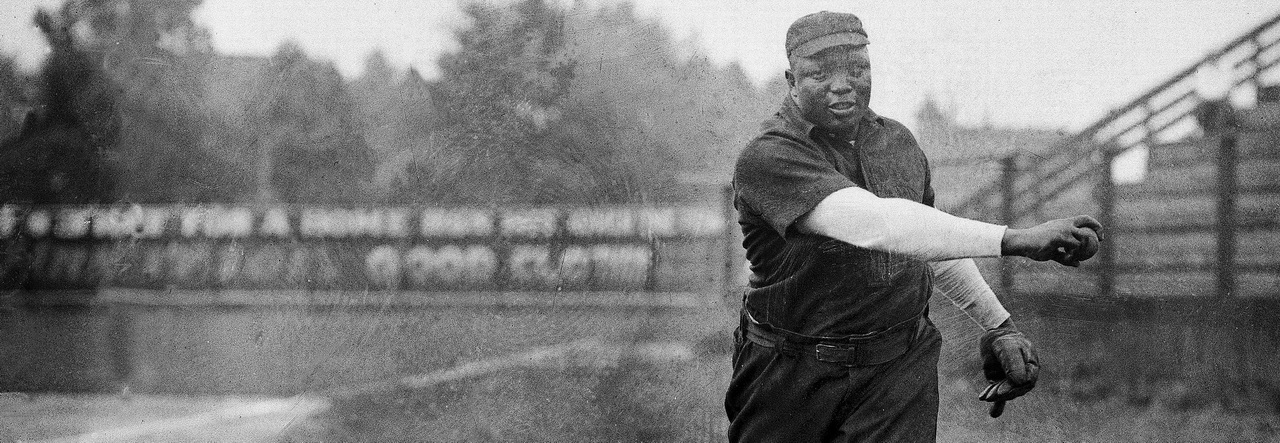
We’ll do this Award Show style, ending with the MVP.
#Silver Sticks
The guideline here is the best offensive performance at each position, with a slightly relaxed PA requirement and combining LF and RF. Players qualify for their team at season’s end, much to Paul Konerko‘s delight.
Pos
American League
National League
C
Ed Bailey (DET/CLE)
Josh Gibson (HOM)
1B
Frank Thomas (CAG)
Paul Konerko (CAG/BBB)
2B
Rogers Hornsby (NYY)
Roberto Alomar (OTT)
3B
Evan Longoria (CLE)
Ron Cey (BRK)
SS
Cal Ripken, Jr (BAL)
Ernie Banks (HOD)
OF
Babe Ruth (NYY)
Larry Walker (OTT)
CF
Turkey Stearnes (SFS)
Oscar Charleston (IND)
OF
Kal Daniels (LAA)
Aaron Judge (PHI)
DH
Ty Cobb (DET)
Willie Stargell (HOM)
Joe Morgan was better offensively than Alomar, but Alomar had 200 more plate appearances and was no slouch himself.
#Rookie Of the Year
This was pretty easy in terms of the overall awards, but the second and third place finishers were far more heavily contested.
Rank
American League
National League
1
Turkey Stearnes (CF, SFS, 22)
Charles Rogan (P/Util, PHI, 27)
2
Cal Ripken, Jr (SS, BAL, 23)
A. Rube Foster (P, KCM, 24)
3
Bump Hadley (P, SFS, 23)
Smokey Joe Williams (P, BRK, 24)
Al Kaline (DET), David Ortiz (MEM), and Jim Whitney (MCG) in the AL, and John Briggs (BRK), Judy Johnson (HOM), and George Foster (IND) in the NL were the next names on the lists, but these selections feel pretty solid.
#All Rounder Award
This one is given to the player whose offense was most well-rounded–walks, power, speed, all of it.
Rank
American League
National League
1
Ty Cobb (DET)
Roberto Alomar (OTT)
2
Kal Daniels (LAA)
Jackie Robinson (BRK)
3
Tris Speaker (CLE)
Oscar Charleston (IND)
#Phineas Flint Award
This goes to the best reliever in each league–not necessarily a closer, but often.
Rank
American League
National League
1
Rod Beck (SFS)
Eric Gagné (BRK)
2
Joe Nathan (LAA/SFS)
Lee Smith (KCM)
3
Goose Gossage (NYY)
Craig Kimbrel (KCM)
#Brock Rutherford Award
This goes to the dominant pitcher in each league, usually a starter.
Rank
American League
National League
1
Lefty Grove (SFS)
Luis Padrón (IND)
2
Bump Hadley (SFS)
Toad Ramsey (HOU)
3
José Méndez (MCG)
A. Rube Foster (KCM)
#Mel Trench Award
And, the biggie, the MVP. A slight prejudice towards batters here, but it’s possible for a pitcher to enter the building.
Rank
American League
National League
1
Ty Cobb (DET)
Josh Gibson (HOM)
2
Babe Ruth (NYY)
Oscar Charleston (IND)
3
Mike Trout (LAA)
Gary Carter (OTT)
As has been constant in much of this Award season, the top spots are clear, and beyond that it’s a little bit of a mess.
Trout’s numbers weren’t as good as Turkey Steranes or Tris Speaker, but he carried Los Angeles all season. That said, this could have been a 3 way tie for AL CF’s. In the NL, you can argue that Ron Cey was more important to Brooklyn than Carter was to Ottawa, and certainly Brooklyn’s Whirled Championship counts for something. But Carter did all that … as a catcher (which underscores Gibson’s edge on the field).
We previewed the Gold Gloves in August, but now it’s time to do the real thing, one per position per league. We’ll go through them first, then list the award recipients at the end.
I do believe in defense mattering over time, as such, we’re using an 800 IP minimum for the GG awards. For each position, we’re listing the top 3 in each league, AL followed by NL.
We have our standard defensive stats here, with the leaders in bold and the worst performers in italics. Range Factor (RF) measures the number of plays made per game–the higher the better. Zone Rating (ZR) attempts to credit players for plays other fielders missed and ding them for plays other fielders made–the higher the better, and it has the benefit of being comparative across the position. Defensive Efficiency (dEff) measures the rate at which an individual fielder contributes to outs being made on balls put into play, with any score over 1.000 being a net positive impact. Finally, Fielding Percentage (fPct) reflects the percentage of times a chance was handled without a mistake–if someone made no errors, their fPct would be 1.000.
Of these, Range Factor is the most susceptible to the impact of the pitching staff and the ballpark, although none of these defensive ratings are perfect.
Outfielders also have Assists (A), more romantically referred to as Outfield Kills are runners eliminated on the bases and Arm Runs (AR), which measures the net runs gained on an outfielder’s throws, including runner advancements.
Finally, catchers, who are really their own thing, also have RTO% (the percentage of runners thrown out trying to steal, abbreviated as RT), PB (passed balls), Framing Runs (the number of runs gained by the catcher’s positioning), and cERx, which reflects the ERA while the catcher was behind the plate compared to the overall staff ERA. A cERx below 1 means the catcher was better than the rest of the staff, above 1, worse.
#C
Lg
Tm
Name
IP
fPct
RF
ZR
dEff
RT
PB
cERx
FR
NL
IND
Johnny Bench
1144
.995
9.3
1.3
1.19
36
11
1.03
7
HOD
Elrod Hendricks
923
.994
8.3
3.8
1.14
40
9
1.01
5
NYG
Buster Posey
1095
.996
8.9
0.4
1.00
35
8
0.96
10
AL
POR
Joe Mauer
1103
.996
9.5
3.5
1.04
39
6
1.01
5
NYY
Thurman Munson
1122
.995
9.8
2.3
1.00
35
5
0.96
4
MCG
Iván Rodríguez
1104
.998
9.8
5.7
1.05
46
17
0.98
2
So, what is a catcher’s primary duty? Helping their staff, controlling the running game, and then, a somewhat distant third, making their own defensive plays.
The choice in the AL is pretty obvious, in the NL, I think it comes down to how much do you weigh Posey’s ability to frame pitches, and his ~150 more innings played than Hendricks.
#1B
Lg
Tm
Name
IP
fPct
RF
ZR
dEff
NL
KCM
Boog Powell
1105
.996
9.1
3.4
1.02
HOD
Anthony Rizzo
828
.995
8.7
0.8
1.02
IND
Joey Votto
1072
1.000
8.4
5.1
1.04
AL
DET
Hank Greenberg
1159
.996
8.3
2.5
1.02
POR
Kent Hrbek
1007
.995
8.6
1.3
1.03
MEM
Bill White
886
.993
9.1
0.5
1.01
Again, one choice is pretty clear–the NL this time.
In the AL, it’s much closer, but Greenberg makes some plays that Hrbek just doesn’t.
#2B
Lg
Tm
Name
IP
fPct
RF
ZR
dEff
NL
KCM
Robinson Canó
1134
.990
4.6
11.0
1.06
BBB
Cupid Childs
1022
.983
4.5
7.3
1.09
PHI
Chase Utley
1173
.994
4.9
13.7
1.07
AL
DET
Charlie Gehringer
971
.989
4.9
-10.7
0.94
BAL
Miller Huggins
923
.987
4.3
10.8
1.10
MCG
Cookie Rojas
877
.993
4.4
-3.3
0.97
These are two relatively easy choices. And, there is a question of what’s going on in the AL, where almost everyone has a negative ZR.
#SS
Lg
Tm
Name
IP
fPct
RF
ZR
dEff
NL
NYG
Brandon Crawford
1046
.966
4.2
11.4
1.07
IND
Barry Larkin
911
.975
4.7
9.0
1.07
KCM
Ozzie Smith
1188
.992
4.7
12.2
1.06
AL
SFS
Dick Lundy
934
.987
4.5
10.8
1.06
CAG
Freddy Parent
952
.978
5.0
13.6
1.06
CLE
Arky Vaughan
1143
.982
4.2
13.4
1.09
In the NL, it’s another clear choice: while Smith and Crawford both make the sensational plays, Smith makes all the plays.
The AL is much, much closer and there’s really not much to choose from between Parent and Vaughan. As such, we’ll go with the player who stayed on the field more.
#3B
Lg
Tm
Name
IP
fPct
RF
ZR
dEff
NL
OTT
Adrián Beltré
1055
.974
2.6
-0.8
1.00
BRK
Ron Cey
1138
.975
2.5
6.0
1.03
PHI
Scott Rolen
1155
.970
2.3
5.0
1.06
AL
POR
Buddy Bell
1169
.968
2.5
8.0
1.05
CLE
Evan Longoria
1148
.963
2.2
4.8
1.04
NYY
Mike Schmidt
1140
.958
2.4
5.3
1.03
The hot corner is a challenge: everyone makes 2, 2 1/2 plays a game, so RF is less useful, although Beltré’s 2.6 does stand out, as does Longoria’s more limited mobility. But it means fPct–as a proxy for errors–and dEff rise in importance. In the AL, while it’s not by a mile, I think Bell is the clear choice while in the AL, it ends up being between Cey and Rolen, with the final edge going to The Penguin.
#LF
Lg
Tm
Name
IP
fPct
RF
ZR
dEff
A
AR
NL
IND
Bob Bescher
839
.989
1.9
-4.8
0.96
2
-2.8
PHI
Sherry Magee
839
.994
1.7
4.8
1.04
1
-2.3
BRK
Roy White
1152
.992
1.9
10.3
1.07
6
-1.0
AL
CLE
Johnny Bates
1018
.978
2.0
8.8
1.06
4
-1.3
SFS
Rickey Henderson
1202
.982
1.6
12.2
1.18
3
-3.6
BAL
Frank Robinson
996
.990
1.8
0.2
1.00
5
-2.2
The AR numbers reflect just how hard it is to prevent runners from advancing on flyballs, and makes Jim Wynn‘s 3.7 mark there all the more remarkable. Unfortunately, the rest of Wynn’s numbers leave him out of the finalists entirely.
The NL is an easy choice, and one that gives us a repeat winner in Roy White. Over in the Al, it’s harder, but Bates makes more plays and has a far better arm than Henderson, despite how much ground the Sea Lions’ speedster covers.
#CF
Lg
Tm
Name
IP
fPct
RF
ZR
dEff
A
AR
NL
OTT
Carlos Beltrán
1045
.982
2.9
9.5
1.06
10
-1.0
PHI
Willie Davis
1035
.988
2.9
16.3
1.10
4
-2.8
NYG
Willie Mays
1214
.989
2.8
14.5
1.05
4
-4.7
AL
BAL
Paul Blair
935
.986
2.7
11.8
1.09
3
-2.6
CLE
Tris Speaker
1047
.982
2.8
10.0
1.06
9
-2.4
SFS
Turkey Stearnes
1027
.979
2.8
7.4
1.05
5
-4.7
Assists can be misleading: Detroit’s Chili Davis gunned down 14 runners and Kansas City’s Willie McGee 11, but they, overall, just weren’t effective enough out there to warrant their inclusion. Remember, the weaker the arm, the more often it gets run on, the more chances for assists you may get.
Look, Willie Mays is a great defensive CF. But Willie Davis, simply, had a better year out there. In the AL, you can only unseat Paul Blair if you give massive weight to Speaker’s additional 3 assists. But given how close they are in AR, it’s hard to rationalize that. So Blair it is once again, our 2nd repeat winner.
#RF
Lg
Tm
Name
IP
fPct
RF
ZR
dEff
A
AR
NL
BBB
Hank Aaron
945
.979
1.7
4.4
1.06
6
0.6
HOM
Roberto Clemente
1134
.979
2.2
7.1
1.06
11
-2.6
KCM
Stan Musial
972
.981
2.0
8.4
1.07
2
-0.4
AL
MEM
Mookie Betts
880
1.000
1.9
7.6
1.07
2
-3.8
DET
Al Kaline
971
.991
2.1
3.8
1.03
6
-1.8
LAA
Ichiro Suzuki
1195
1.000
2.0
5.7
1.04
7
-3.0
The NL is insanely close. Musial makes more spectacular plays than Clemente, Clemente makes marginally more plays overall and has that cannon for an arm, although Musial limits baserunners more effectively. It’s a coin flip, but today we’ll go with Clemente’s additional 150 innings as the difference maker.
In the AL, it’s clearly one of the players who didn’t make a single miscue, and although Betts has the edge in a few metrics, Suzuki has over 300 more innings–1200 innings without an error, but with great range, is incredible.
#P
We’re using 140 innings as the cutoff for the pitchers. Additionally, we have access to number of Framing Runs the pitcher benefitted from, as well as the SB numbers against them. Errors tend to be so low from pitchers, that fPct is no longer a really useful metric.
Lg
Tm
Name
IP
RF
ZR
dEff
RT
FR
NL
HOD
Bob Rush
186
1.2
3.7
1.00
60
0
HOD
Jack Taylor
192
0.9
5.2
1.00
57
0
PHI
JM Ward
196
1.0
3.4
1.16
51
0.4
AL
POR
Bert Blyleven
204
0.9
5.6
1.00
59
0.3
BAL
Bob Feller
153
1.0
3.3
0.91
68
-0.3
POR
Walter Johnson
214
0.8
5.0
1.20
59
0
Sample size, of course, wrecks havoc with pitcher’s defensive stats. Still, we have what we have.
Not only does Bob Rush make a lot of plays, he keeps runners from stealing, and while Jack Taylor makes more spectacular plays, Rush’s ZR is more than good enough to take the award home. In the AL, Johnson and Blyleven are neck-and-neck, but we’ll go with Blyleven, who has a slight edge in most categories.
#The Gold Gloves
Pos
American League
National League
C
Iván Rodríguez (MCG)
Elrod Hendricks (HOD)
1B
Hank Greenberg (DET)
Joey Votto (IND)
2B
Miller Huggins (BAL)
Chase Utley (PHI)
SS
Arky Vaughan (CLE)
Ozzie Smith (KCM)
3B
Buddy Bell (POR)
Ron Cey (BRK)
LF
Johnny Bates (CLE)
Roy White (BRK)
CF
Paul Blair (BAL)
Willie Davis (PHI)
RF
Ichiro Suzuki (LAA)
Roberto Clemente (HOM)
P
Bert Blyleven (POR)
Bob Rush (HOD)
There are a surprising number of teams with 2 Gold Glove winners–Baltimore, Portland, Cleveland, Philadelphia, Brooklyn, and the House of David.
But the overall number of finalists may be more interesting, as it should give some indications as to the higher tier defensive units in the league. Here’s how that stacks up:
6. Cleveland 5. Philadelphia 4. House of David, Indianapolis, Kansas City, Portland 3. Baltimore, Detroit, New York Gothams, San Francisco 2. Birmingham, Brooklyn, Memphis, Miami, New York Black Yankees, Ottawa 1. Chicago, Homestead, Los Angeles
We’re doing 3 teams for each league, with players color coded by their Tier Level (S Tier, A Tier, B Tier, C Tier), with selections for each position, 3 starters, 2 bullpen arms, and a closer.
Just a glance shows the differences in the leagues: you want offense, look at the AL, you want pitching, the NL. That’s a generality, and like all such, not fully accurate: the NL actually has more S Tier bats, but the AL is overall more top heavy offensively.
San Francisco, predictably, leads the way with 12 selections while the rivalry between the Black Yankees and Cleveland continues, with the Bill James Division heavyweights having 8 each.
#AL
Pos
First Team
Second Team
Third Team
C
Ed Bailey (DET/CLE)
Mickey Cochrane (SFS)
Curt Blefary (BAL)
1B
Jim Thome (MCG)
Lance Berkman (CLE)
Jack Clark (SFS)
2B
Eddie Collins (CAG)
Rogers Hornsby (NYY)
Miller Huggins (BAL)
SS
Arky Vaughan (CLE)
Cal Ripken, Jr. (BAL)
Dick Lundy (SFS)
3B
Evan Longoria (CLE)
Mike Schmidt (NYY)
Jimmie Foxx (SFS)
LF
Babe Ruth (NYY)
Kal Daniels (LAA)
Frank Robinson (BAL)
CF
Turkey Stearnes (SFS)
Tris Speaker (CLE)
Mike Trout (LAA)
RF
Mickey Mantle (NYY)
Joe Jackson (CAG)
Yasiel Puig (MCG)
DH
Ty Cobb (DET)
Lou Gehrig (NYY)
Reggie Jackson (SFS)
SP
Lefty Grove (SFS) José Méndez (MCG) Jim Whitney (BBB/MCG)
Bump Hadley (SFS) Andy Pettitte (NYY) Eddie Plank (SFS)
Ed Walsh (CAG) Brett Anderson (LAA) Ron Guidry (NYY)
RP
Ken Howell (SFS) Andrew Miller (MEM)
Ross Reynolds (LAA) Al Smith (CLE)
Firpo Marberry (CLE) Ron Reed (CLE)
CL
Rod Beck (SFS)
Goose Gossage (NYY)
Jonathan Papelbon (MEM/MCG)
I do wonder if this points to how fragile Cleveland is. The Spiders are one of only 2 teams to make the playoffs in both WBL seasons, but if you were to pick names likely to fade off this list, Arky Vaughan, Evan Longoria, Al Smith, and Firpo Marberry would jump out.
It also shows just how top heavy Los Angeles is: 2 S-Tier players (plus Brett Anderson and Ross Reynolds) with nothing to show for it. At the other end, there’s Detroit–the other team to make the playoffs each year–with only a single player (the incomparable Ty Cobb) listed, further reinforcing the Wolverines as having done it with a true team effort (although this was also quite close: Terry Adams, Al Kaline, and Hank Greenberg were all in contention for 3rd Team honors).
And the less said about Memphis, the better.
#NL
Pos
First Team
Second Team
Third Team
C
Josh Gibson (HOM)
Gary Carter (OTT)
Mike Piazza (BRK)
1B
Paul Konerko (CAG/BBB)
Will Clark (NYG)
Jeff Bagwell (HOU)
2B
Roberto Alomar (OTT)
Joe Morgan (IND)
Ryne Sandberg (HOD)
SS
Ernie Banks (HOD)
Carlos Correa (HOU)
Alex Rodríguez (OTT)
3B
Ron Cey (BRK)
Albert Pujols (KCM)
Scott Rolen (PHI)
LF
Jim Wynn (HOU)
Ryan Braun (BBB)
Rick Reichardt (HOM)
CF
Oscar Charleston (IND)
Willie Mays (NYG)
Charles Rogan (PHI)
RF
Aaron Judge (PHI)
Larry Walker (OTT)
Tony Gwynn (HOU)
DH
Willie Stargell (HOM)
Benny Kauff (NYG)
Rick Monday (OTT)
SP
Luis Padrón (IND) Toad Ramsey (HOU) A. Rube Foster (KCM)
Smokey Joe Williams (BRK) Smokey Joe Wood (KCM) Fernando Valenzuela (BRK)
Roger Clemens (HOU) Hardie Henderson (PHI) Orel Hershiser (BRK)
RP
Lee Smith (HOD/KCM) Eddie Guardado (KCM)
Robb Nen (NYG/HOM) Terry Forster (BRK)
Andrew Chafin (HOU) Fred Cambria (PHI)
CL
Eric Gagné (BRK)
Josh Lindblom (HOM)
Bob Howry (PHI)
Brooklyn and Kansas City’s pitching is so strong. And imagine just how bad Ottawa’s pitching had to be, given their offensive representation.
Indianapolis has 3 S Tier players, giving them perhaps the most dominant nucleus in the league to build around. Kansas City has 4 S Tier players, but 2 of them are relievers, so most GM’s would prefer the ABC’s group.
And there are some league-wide deficiencies, especially at 1B and LF. Jim Wynn is a nice player, but the best in the league?
Both of Birmingham’s entrants were brought over in trade … but they also lost Jim Whtiney in those deals.
#Team by Team
Portland had nobody–nobody–who was deemed top 3 in the AL at their position. Ouch.
Baltimore. 4: Curt Blefary, Miller Huggins, Cal Ripken, Jr, Frank Robinson. Birmingham, 2: Ryan Braun, Paul Konerko. Brooklyn. 7: Ron Cey, Terry Forster, Eric Gagne, Orel Hershiser, Mike Piazza, Fernando Valenzuela, Smokey Joe Williams Chicago. 3: Eddie Collins, Joe Jackson, Ed Walsh. Cleveland. 8: Ed Bailey, Lance Berkman, Evan Longoria, Firpo Marberry, Ron Reed, Al Smith, Tris Speaker, Arky Vaughan. Detroit. 1: Ty Cobb. Homestead. 5: Josh Gibson, Josh Lindblom, Robb Nen, Rick Reichardt , Willie Stargell. Houston. 7: Jeff Bagwell, Andrew Chafin, Roger Clemens, Carlos Correa, Tony Gwynn, Toad Ramsey, Jim Wynn. Indianapolis. 3: Oscar Charleston, Joe Morgan, Luis Padrón. Kansas City. 5: A. Rube Foster, Eddie Guardado, Albert Pujols, Lee Smith, Smokey Joe Wood. Los Angeles. 4: Brett Anderson, Kal Daniels, Ross Reynolds, Mike Trout. Memphis. 1: Andrew Miller. Miami. 5: José Méndez, Jonathan Papelbon, Yasiel Puig, Jim Thome, Jim Whitney. New YorkBlack Yankees. 8: Lou Gehrig, Goose Gossage, Ron Guidry, Rogers Hornsby, Mickey Mantle, Andy Pettitte, Babe Ruth, Mike Schmidt. New York Gothams. 3: Will Clark, Benny Kauff , Willie Mays. Ottawa. 5: Roberto Alomar , Gary Carter, Rick Monday, Alex Rodríguez, Larry Walker. Philadelphia. 7: Fred Cambria, Hardie Henderson, Bob Howry, Aaron Judge, Charles Rogan, Scott Rolen. Portland. 0. San Francisco. 12: Rod Beck, Jack Clark, Mickey Cochrane, Jimmie Foxx, Lefty Grove, Bump Hadley, Ken Howell, Reggie Jackson, Dick Lundy, Eddie Plank, Turkey Stearnes. Wandering House of David. 2: Ernie Banks, Ryne Sandberg.
This list includes both players who were closers all year and those who moved in or out of that role for a significant part of the year.
Our usual practices prevail: bold for top 3 and italics for bottom 3. Pitchers with below 162 IP aren’t included in the top/bottom markers.
#S Tier
Lg
Tm
Name
Age
W-L
ERA
G
WHIP
Other
AL
SFS
Rod Beck
24
4-4
4.88
56
1.00
41 Sv; 1 H .215 BABIP 1.7 BB/9 5.4 K/BB
NL
BRK
Eric Gagne
27
3-3
3.00
56
1.13
39 Sv .205 BA 0.8 HR/9 10.7 K/9 2.99 FIP
These were the dominant closers all year, with Eric Gagne being the better of the 2, but only barely. And some would argue that Rod Beck, by virtue of being 3 years younger, holds more value.
#A Tier
Lg
Tm
Name
Age
W-L
ERA
G
WHIP
Other
NL
PHI
Bob Howry
34
4-1
3.18
38
0.91
25 Sv .221 BABIP 0.9 BB/9 8.8 K/BB
NL
KCM
Craig Kimbrel
25
5-5
3.40
49
1.13
15 Sv; 11 H .182 BA
NL
HOM
Josh Lindblom
31
8-4
3.40
56
1.28
35 Sv 0.8 HR/9
An interesting group. Bob Howry, much maligned last season, bounced back in a big way despite an injury, while Josh Lindblom was just effective all year, perhaps the only truly dependable arm on Homestead’s staff.
And then there’s Craig Kimbrel, who was essentially unhittable after being moved into the closer spot for Kansas City, where he’ll start next season.
#B Tier
Lg
Tm
Name
Age
W-L
ERA
G
WHIP
Other
AL
NYY
Goose Gossage
23
4-5
4.04
58
1.17
20 Sv; 8 H
NL
NYG
Brian Wilson
28
2-2
3.03
36
1.32
22 Sv 10.3 K/9 3.47 FIP
NL
BBB
Harley Young
26
1-0
2.29
46
1.02
15 Sv; 6 H .210 BA 0.5 HR/9 2.92 FIP
Brian Wilson and Harley Young could belong a tier or 2 above, but Wilson missed a fair bit of the season due to injury while Young wasn’t named the closer for Birmingham until well into the year. Goose Gossage was effective after being made the Black Yankees’ closer, but if you compare him to Young, Young clearly had the better year.
#C Tier
Lg
Tm
Name
Age
W-L
ERA
G
WHIP
Other
AL
CLE
Terry Adams
23
1-6
4.69
45
1.31
23 Sv; 2 H
AL
BAL
Buddy Groom
37
1-4
5.32
46
1.27
18 Sv; 5 H 3.2 HR/9 5.9 K/9 7.17 FIP
AL
MEM/ MCG
Jonathan Papelbon
31
3-6
4.50
60
1.27
28 Sv; 5 H
These are either useful arms at the end of the bullpen (Terry Adams, Jonathan Papelbon) or a surprising success in a limited time as a closer (Buddy Groom). Groom’s peripherals indicate this may be a mirage, but he was the best closer the Black Sox had all season.
#D Tier
Lg
Tm
Name
Age
W-L
ERA
G
WHIP
Other
—
BAL/ KCM
Joe Beggs
34
2-8
5.68
45
1.32
18 Sv; 1 H 5.3 K/9
NL
IND
Rob Dibble
27
3-4
4.87
48
1.49
24 Sv; 1 H 5.9 BB/9
NL
OTT
Tom Henke
31
2-3
5.73
42
1.27
23 Sv .214 BABIP 3.8 HR/9 7.39 FIP
AL
DET
Mike Henneman
28
4-3
4.10
43
1.42
26 Sv .327 BABIP 10.4 K/9
—
NYY/ HOU
Sparky Lyle
29
2-5
4.90
55
1.29
10 Sv; 11 H 2.2 BB/9 3.7 K/BB
NL
HOU
Tug McGraw
27
5-5
3.92
41
1.31
12 Sv; 8 H
AL
CAG
AJ Minter
25
5-4
5.54
54
1.37
17 Sv; 2 H 4.6 K/9 1.2 K/BB
AL
LAA/ SFS
Joe Nathan
31
5-6
5.43
57
1.47
22 Sv; 6 H
Everyone has some issues here, from Tom Henke‘s tendency to give up the longball to Mike Henneman‘s injury absence, to the inability of Sparky Lyle and Tug McGraw to really gel in Houston. But none of these are in danger of being forced out of the league, and many of them will return as closers next season.
#F Tier
Lg
Tm
Name
Age
W-L
ERA
G
WHIP
Other
AL
NYY
Aroldis Chapman
27
5-4
5.47
58
1.49
18 Sv; 8 H 4.8 BB/9 1.6 K/BB
AL
POR
Trevor Hoffman
34
3-7
5.36
45
1.43
15 Sv; 8 H
AL
MCG
Ricky Nolasco
31
7-6
5.50
54
1.52
26 Sv; 4 H .294 BA 3.2 HR/9 7.08 FIP
NL
KCM
Jeff Pfeffer
24
1-4
6.16
43
1.53
16 Sv; 1 H .303 BA .338 BABIP
NL
BBB
Juan Rincón
27
3-3
8.47
36
1.85
12 Sv; 1 H .338 BA .371 BABIP
AL
LAA
Francisco Rodríguez
25
3-5
6.87
53
1.63
8 Sv; 12 H 5.4 BB/9 1.6 K/BB
This group struggled, but are on a variety of paths: Francisco Rodríguez may actually start next season as the Angels’ closer and Trevor Hoffman will get another shot in Portland. But Jeff Pfeffer is likely done as a closer, and Juan Rincón pitched himself right out of the league. Aroldis Chapman remains an elite power arm, but without a little more control is probably destined to bounce around a bit.
This is everyone who qualified for the ERA crown, plus a heaping handful of others who made at least 10 starts during the season. If a player had less than 162 innings, they are (a) probably knocked down a tier and (b) their name is prefaced by a * and italicized.
We’ve leaned on valuing IP in these rankings, perhaps a bit too much. But these are your starters, and they need to show up, game after game. It also means the Tiers are a little different: there are D-Tier pitchers here that you would welcome at the back end of your rotation, and it’s really only some of them, and the F Tier, that are truly an issue.
Our usual practices prevail: bold for top 3 and italics for bottom 3. Pitchers with below 162 IP aren’t included in the top/bottom markers.
#S Tier
Lg
Tm
Name
Age
W-L
ERA
IP
WHIP
Other
NL
KCM
A. Rube Foster
24
11-8
3.30
204
1.02
.189 BA .219 BABIP 0.7 HR/9 3.63 FIP
NL
IND
Luis Padrón
22
23-3
3.22
235
1.04
220 K .192 BA .225 BABIP
NL
HOU
Toad Ramsey
23
16-10
3.23
223
0.97
282 K .182 BA 11.4 K/9 3.8 K/BB 3.40 FIP
Just look at all that bold.
It’s been these 3 all year, and there’s a hair’s breadth between them. The analytics like Toad Ramsey, but Luis Padrón‘s record is stunning and while his ERA crown came by the absolute thinnest of margins, it did come.
Knuckleballers are always a bit unpredictable season-to-season, and it may very well be that A. Rube Foster has the best career of these three. But great things are expected of each of them.
#A Tier
Lg
Tm
Name
Age
W-L
ERA
IP
WHIP
Other
AL
SFS
Lefty Grove
27
16-6
4.40
209
1.15
230 K 2.2 BB/9 9.9 K/9 4.4 K/BB
AL
MCG
José Méndez
23
13-6
4.53
233
1.11
201 K 2.2 BB/9
NL
BRK
Fernando Valenzuela
24
14-5
3.69
163
1.08
1 Sv; 4 H
—
BBB/ MCG
Jim Whitney
24
10-7
3.83
202
1.10
1 Sv; 2 H
NL
BRK
Smokey Joe Williams
24
12-13
3.93
202
1.23
0.8 HR/9 3.55 FIP
NL
KCM
Smokey Joe Wood
22
15-12
4.11
191
1.13
Lefty Grove and Smokey Joe Williams each have an argument to move up a tier, but are held back, Grove’s instance by his ERA, in Williams’ by his record. Still, they are the class of this group.
If José Méndez hadn’t led the league in innings, he would probably drop down a level, but we’re nitpicking: these are staff aces on most teams. Note that Miami, Brooklyn, and Kansas City already have 2 pitchers each on this list.
#B Tier
Lg
Tm
Name
Age
W-L
ERA
IP
WHIP
Other
AL
LAA
Brett Anderson
22
11-6
4.34
189
1.12
NL
HOU
* Ice Box Chamberlain
19
4-4
3.56
109
1.13
1 Sv; 1 H
NL
HOU
Roger Clemens
25
17-10
3.71
211
1.13
AL
SFS
Bump Hadley
23
18-6
4.10
189
1.18
0.9 HR/9 4.2 BB/9
NL
PHI
Hardie Henderson
21
18-12
3.78
209
1.23
4.2 BB/9 1.7 KK/B
NL
BRK
Orel Hershiser
27
19-5
3.69
185
1.21
NL
HOD
* Kyle Peterson
22
8-3
3.80
107
1.16
AL
NYY
Andy Pettitte
33
18-9
4.43
201
1.21
AL
SFS
Eddie Plank
27
20-7
4.42
210
1.31
AL
CAG
Ed Walsh
25
10-11
3.94
205
1.15
1 Sv 201 K .225 BABIP
Hardie Henderson, Roger Clemens, and perhaps Eddie Plank (but that would be giving an awful lot of weight on 20 victories) could all be nudged up, but I’m comfortable with this. These are all front of rotation hurlers, with the only real surprise being Brett Anderson, who quietly excelled in a difficult year for Los Angeles. Ed Walsh, last year’s Rookie of the Year, avoided the sophomore slump entirely.
If you’re looking for skepticism, both Ice Box Chamberlain (due to age) and Kyle Peterson (due to coming out of nowhere) are decent bets to regress.
#C Tier
Lg
Tm
Name
Age
W-L
ERA
IP
WHIP
Other
AL
POR
Walter Ball
26
8-7
4.26
142
1.20
NL
PHI
Steve Carlton
25
12-13
5.05
187
1.24
NL
IND
Johnny Cueto
29
12-14
4.62
212
1.14
NL
HOM
* Doug Drabek
25
6-8
4.76
147
1.17
1 H
NL
BRK
Don Drysdale
22
11-8
5.66
186
1.28
AL
LAA
Dwight Gooden
22
11-11
4.36
194
1.29
AL
NYY
Ron Guidry
28
11-7
4.51
208
1.24
251 K 10.9 K/9
NL
OTT
Roy Halladay
29
15-9
5.17
195
1.26
2.2 BB/9
AL
POR
Walter Johnson
20
13-12
4.28
214
1.28
NL
BRK
* Sandy Koufax
21
6-3
4.93
119
1.16
2 H
AL
MEM
Stubby Overmire
25
13-10
4.72
212
1.26
6.1 K/9
NL
NYG
Gaylord Perry
22
12-15
4.34
189
1.12
NL
KCM
José Rijo
26
8-12
5.09
179
1.26
NL
PHI
Charles Rogan
27
12-9
4.51
188
1.24
AL
CLE
Bill Steen
26
13-10
4.71
193
1.33
1.9 K/BB
NL
NYG
Don Sutton
25
17-8
5.23
174
1.25
NL
PHI
JM Ward
20
6-10
5.01
196
1.16
Gaylord Perry and JM Ward were perhaps the unluckiest pitchers in the league this year: a bit of good fortune, and either could be several tiers above. If anyone is ranked too highly, it’s probably Bill Steen. There are a lot of names here that could easily take a step forward–Steve Carlton, Don Drysdale, and Walter Johnson especially.
Sandy Koufax blossomed in the bullpen after losing his rotation spot, but Brooklyn is likely to try him again as a starter next season.
Joe Rogan is just a remarkable talent. Everyone else here has great value solely from being on the mound: add Rogan’s bat and … yoikes.
#D Tier
Lg
Tm
Name
Age
W-L
ERA
IP
WHIP
Other
AL
MEM
Len Barker
25
11-12
4.99
180
1.44
AL
SFS
* Tommy Bridges
37
6-7
5.38
146
1.21
AL
POR
Bert Blyleven
21
10-11
5.03
204
1.32
NL
KCM
Frank Castillo
23
12-7
5.21
193
1.32
AL
SFS
* Watty Clark
26
6-4
4.02
134
1.30
2 H
NL
PHI
* Ray Collins
24
4-7
4.62
121
1.27
1 H
AL
CLE
* Bob Feller
20
13-3
4.30
153
1.34
NL
BBB
* Lefty Gomez
27
9-9
4.90
154
1.30
2 H
AL
NYY/ CAG
Waite Hoyt
24
11-4
4.89
169
1.44
4.1 BB/9
NL
BRK
Frank Knauss
23
12-6
4.55
180
1.34
NL
HOM
Francisco Liriano
23
10-12
5.03
181
1.38
NL
BBB
Greg Maddux
23
10-14
5.35
195
1.28
59 HRA .225 BABIP 6.50 FIP
AL
BAL
Dennis Martínez
24
12-8
5.12
202
1.42
NL
NYG
Christy Mathewson
22
7-16
5.61
210
1.40
207 K
AL
POR
* Joseíto Muñoz
20
4-4
4.56
101
1.37
1 Sv; 2 H
AL
BAL
* Jim Palmer
25
8-8
4.88
138
1.37
1 H
NL
BBB
Alejandro Peña
26
8-11
5.59
180
1.31
NL
HOM
Billy Pierce
30
10-11
5.77
173
1.36
NL
HOD
* Rick Reuschel
30
8-8
4.61
135
1.31
1 Sv; 1 H
NL
HOD
Bob Rush
24
11-9
5.28
186
1.32
2 H
NL
HOD
CC Sabathia
28
5-15
5.89
202
1.35
1 Sv; 1 H 64 HRA 3.2 HR/9 6.90 FIP
AL
CAG
Ben Sheets
27
6-12
5.88
165
1.32
1 H
NL
OTT
* Bill Smith
26
10-3
3.77
124
1.35
1 H
NL
HOU
Stephen Strasburg
25
9-10
5.87
169
1.37
NL
HOD
Jack Taylor
26
12-10
5.90
192
1.42
.291 BA 6.4 K/9
AL
CLE
Cy Young
25
15-9
5.38
199
1.39
.307 BABIP
There are some absolute conundrums here. Greg Maddux‘s issues are obvious in the final column: his BABIP is top-3 in the league, showing just how good his stuff is. But he has to keep the ball in the ballpark. At least once in a while.
Christy Mathewson and Cy Young seem like they could do more than be massive inning eaters, but they need to be harder to hit to make the jump forward. But pitching is weird: Jack Taylor and Gerrit Cole (see below) were among the best on the mound last season, and struggled mightily this.
Bob Feller would warrant a bump as well with a few more solid starts.
#F Tier
Lg
Tm
Name
Age
W-L
ERA
IP
WHIP
Other
AL
CAG
Mark Buehrle
31
8-12
5.11
185
1.38
6.3 K/9
AL
MEM
* David Bush
26
9-9
6.58
149
1.32
AL
LAA
Gerrit Cole
26
7-15
6.36
166
1.43
2.9 HR/9 6.52 FIP
AL
MCG
Cole Hamels
25
11-12
6.18
178
1.42
63 HRA .293 BA 3.2 HR/9 3.7 K/BB
NL
NYG
* Carl Hubbell
26
6-10
5.75
160
1.29
1 H
NL
HOM
* Cliff Lee
30
8-4
5.30
114
1.32
3 H
NL
HOU
Roy Oswalt
28
7-11
6.53
181
1.49
.295 BA .305 BABIP
NL
OTT
Charles Radbourn
27
12-13
5.89
202
1.35
AL
DET
Charlie Root
31
11-10
6.15
199
1.42
59 HRA
AL
LAA
Tom Seaver
23
7-8
5.81
164
1.44
—
BBB/ CAG
* Sam Streeter
25
3-11
5.63
123
1.34
AL
POR
Dizzy Trout
29
5-12
5.93
162
1.50
4.1 BB/9 1.8 K/BB
AL
DET
Justin Verlander
25
5-12
6.48
169
1.52
.310 BABIP
NL
IND
* Doc White
27
5-12
6.55
143
1.34
1 Sv; 3 H
Most of these issues are clear: too many homeruns, too many walks, way too many runners on the basepaths. Maybe Old Hoss Radbourn could argue to be one tier up. Maybe.
Other than that, it must be said there is a ton of talent here: Roy Oswalt, Tom Seaver, and Justin Verlander jump out as most likely to bounce back next year.
It must be said there are probably 2 dozen more names that could be listed in the F Tier. Check out the individual team maps as they are published for those, but suffice to say that, when a pitcher goes down in flames in the WBL, they burn awfully bright.
Here we have everyone with at least 30 IP, and no more than 2 games started or 5 saves: essentially, pitchers who got some usage, but were not used as swing-starters or closers. A few other relievers who were clearly not closers were added despite having more than 5 saves.
This is an incredibly volatile populations, and success in one year should not be seen as a predictor for future seasons. Ron Reed, I’m looking at you. It’s also hard to find good bullpen arms: there are a ton more names in Tiers C and D than above.
Our usual practices prevail: bold for top 3 and italics for bottom 3.
#S Tier
Lg
Tm
Name
Age
W-L
ERA
G
WHIP
Other
NL
KCM
Eddie Guardado
26
2-3
2.53
47
0.99
2 Sv; 10 H 1.7 BB/9 4.7 K/BB
NL
HOD/ KCM
Lee Smith
34
5-2
2.65
50
0.75
6 Sv; 12 H 2.78 FIP
Lee Smith was probably the best overall reliever in the game, obviously good enough to be a closer, but a devastating arm in the late innings. His teammate, Eddie Guardado, was just quietly undeniable all season.
#A Tier
Lg
Tm
Name
Age
W-L
ERA
G
WHIP
Other
NL
PHI
Fred Cambria
23
5-1
3.04
39
1.14
2 Sv; 7 H 5.5 K/9
NL
HOU
Andrew Chafin
25
2-3
3.77
47
1.10
4 Sv; 7 H
NL
BRK
Terry Forster
22
1-2
4.25
47
1.21
2 Sv; 16 H 2.92 FIP
NL
NYG/ HOM
Robb Nen
32
4-5
3.32
55
1.02
10 Sv; 13 H
Terry Forster may have an argument to be nudged up, but that ERA is distracting. Andrew Chafin was steady all season in an otherwise tumultuous Houston pen, while Fred Cambria just ran under the radar end to end.
#B Tier
Lg
Tm
Name
Age
W-L
ERA
G
WHIP
Other
NL
PHI
Pedro Feliciano
33
0-2
4.66
41
1.04
9 H .200 BA 5.6 K/9
NL
BRK
Trevor Hildenberger
27
6-3
5.03
53
1.01
11 Sv; 7 H
AL
SFS
Ken Howell
24
5-1
2.79
52
1.26
6 Sv; 15 H
NL
PHI
Ted Kennedy
22
6-4
4.05
60
1.17
5 Sv; 15 H
NL
KCM
Mike Kume
30
4-1
1.95
22
1.08
.187 BA 0.3 HR/9 1.5 K/BB
NL
NYG
Mike Norris
36
4-5
4.34
52
1.24
6 Sv; 12 H
AL
MEM
Andrew Miller
23
8-8
4.21
74
1.29
6 Sv; 12 H
—
CAG/ BBB
Akinori Otsuka
33
8-3
2.50
45
1.25
7 Sv; 7 H
AL
LAA
Ross Reynolds
26
2-1
3.56
33
1.30
1 Sv; 6 H 0.2 HR/9 2.92 FIP
AL
CLE
Al Smith
26
0-0
2.87
33
1.47
6 H 0.3 HR/9 5.5 BB/9 3.07 FIP
NL
HOD
Karl Spooner
24
3-3
5.01
37
1.04
6 Sv; 6 H
Of this group, Mike Kume looks like the most likely to be a fluke–it’s hard to sustain that kind of success with that low of a K rate. Al Smith‘s debut was fantastic, but he may be more suited to be a lefty specialist. Ross Reynolds was strong all season, and should see an expanded role next season.
We should also mention Mike Norris, who followed last year’s stellar season with a very solid one and the eternally dependable Ken Howell.
#C Tier
Lg
Tm
Name
Age
W-L
ERA
G
WHIP
Other
NL
IND
Jack Billingham
24
5-2
5.15
52
1.38
2 Sv; 9 H
AL
MEM
Tommy de la Cruz
34
1-5
6.12
36
1.22
5 Sv; 3 H
NL
KCM
Frank DiPino
26
3-1
3.81
48
1.34
2 Sv; 9 H
NL
HOU
John Franco
27
3-3
4.83
56
1.37
1 Sv; 15 H
AL
CLE
Cory Gearrin
27
5-1
3.22
46
1.35
8 Sv; 10 H
NL
HOM
Michael Jackson
33
1-7
5.67
56
1.43
1 Sv; 21 H 2.0 BB/9
NL
PHI
Brad Kilby
27
3-3
6.20
49
1.24
2 Sv; 14 H 3.4 HR/9 1.2 BB/9 7.7 K/BB
AL
CLE
Firpo Marberry
28
7-0
4.83
51
1.33
3 Sv; 13 H
AL
DET
Buddy Napier
32
2-3
5.04
38
1.32
2 Sv; 8 H 6.0 K/9
AL
CLE
Ron Reed
34
4-6
4.71
44
1.26
2 Sv; 6 H
AL
MEM
Skel Roach
29
2-1
4.31
41
1.49
3 Sv; 12 H .143 BA 0 HR/9 9.1 BB/9 10 K/9 1.1 K/BB
NL
OTT
BJ Ryan
28
2-3
4.61
56
1.39
2 Sv; 16 H 10.2 K/9
AL
CAG/ NYY
Hoyt Wilhelm
31
4-4
4.72
59
1.35
3 Sv; 12 H
This group gets a little more interesting: Michael Jackson had a few horrible outings, but was otherwise quite steady for Homestead while Brad Kilby was only a few homeruns from moving up a level or 2.
And then there is Skel Roach. Unhittable. Dominant strikeout pitcher. And can’t find the strike zone ever, allowing over a walk per inning. That means there’s huge potential there, but how often does someone who throws this hard master their command?
#D Tier
Lg
Tm
Name
Age
W-L
ERA
G
WHIP
Other
NL
HOD
Ed Bauta
28
4-5
3.41
55
1.45
8 Sv; 8 H
AL
DET
Chad Bradford
30
8-7
5.32
64
1.40
10 Sv; 10 H
NL
IND
Clay Carroll
31
1-3
4.66
53
1.41
2 Sv; 10 H
AL
NYY
Rheal Cormier
35
1-4
5.40
55
1.56
18 H
—
NYG/ DET
Steve Howe
27
2-1
6.02
64
1.39
9 H 4.4 K/BB
—
POR/ PHI
Mark Melancon
31
7-2
5.16
59
1.49
3 Sv; 7 H .310 BA .361 BABIP
AL
BAL
Gregg Olsen
24
3-4
5.44
41
1.72
4 Sv; 8 H .313 BA .379 BABIP
NL
HOM
Rick Ownbey
28
3-1
4.33
44
1.37
7 H
—
NYG/ DET
Troy Percival
32
3-4
5.99
64
1.40
1 Sv; 11 H 3.9 HR/9 7.74 FIP
AL
DET
Jack Wilson
23
6-1
5.43
38
1.57
5 H 5.6 BB/9 1.7 K/BB
Mark “The Vulture” Melancon continues to win at a rate his statistics don’t support while Rheal Cormier was another victim of a few poor outings in an otherwise solid season. You also see all of Detroit’s struggles here: while both Troy Percival and Steve Howe pitched better after their arrival, their pen remained weaker than hoped for even with the changes.
#F Tier
Lg
Tm
Name
Age
W-L
ERA
G
WHIP
Other
AL
MEM
Heath Bell
32
3-5
6.53
58
1.53
2 Sv; 8 H
NL
HOU
Brad Lidge
28
4-3
6.26
43
1.57
6 H
AL
MCG
Braden Looper
26
2-2
5.90
47
1.55
3 Sv; 10 H
NL
IND
Rob Murphy
27
3-8
5.66
50
1.62
2 Sv; 13 H 7.49 FIP
AL
NYY
David Robertson
25
3-3
6.94
44
1.73
5 H .311 BA .348 BABIP 9.4 K/9
AL
CLE/ SFS
Huston Street
24
6-3
6.27
44
1.50
1 Sv; 9 H
AL
BAL/ POR
John Wetteland
24
1-10
7.96
53
1.50
5 Sv; 9 H 3.5 HR/9 7.82 FIP
Why Portland kept trotting John Wetteland out there is a mystery that may remain forever unsolved. He was awful, despite an obviously live arm.
Huston Street pitched far better for San Francisco than Cleveland, and David Robertson‘s arm is clearly better than his initial WBL performance.
These are players who played more than half their games at DH. We’re using the Def column to note their primary position, and a +/- system to indicate their effectiveness there.
Again, the AL dominates here.
#S Tier
Lg
Tm
Name
Age
Slash
Other
Def
AL
DET
Ty Cobb
21
386/440/841
54 HR 140 RBI 157 R 82 SB
RF ++
AL
NYY
Lou Gehrig
24
292/399/721
63 HR 132 RBI 120 R
1B ++
Neither of these players are the typical DH types, but their teams have better options at their primary positions. Ty Cobb‘s season is one for the ages, and Lou Gehrig, often overshadowed by Babe Ruth in New York, was every bit as valuable this year.
#A Tier
Lg
Tm
Name
Age
Slash
Other
Def
AL
CLE
Ron Blomberg
25
276/348/640
54 HR 143 RBI 106 R
1B – LF –
AL
MCG
José Canseco
27
257/357/705
68 HR 124 RBI 113 R 22 SB
RF –
AL
SFS
Reggie Jackson
24
283/394/574
41 HR 107 RBI 114 R 36 SB
RF ++
AL
MEM
Manny Ramírez
26
280/354/670
46 HR 110 RBI
RF –
NL
HOM
Willie Stargell
31
278/354/648
56 HR 125 RBI
1B LF –
The miracle of Ron Blomberg continues, unfortunately. Still, his profound platoon split is beginning to take it’s toll, and I foresee a cliff in his future.
Of the rest of this group, only Reggie Jackson really should be in the field, even at the relatively early points in their careers. Manny Ramírez took a massive step forward for Memphis, and Willie Stargell shows no signs of slowing down while José Canseco, once more, pushed Ruth for the HR total until late in the season.
#B Tier
Lg
Tm
Name
Age
Slash
Other
Def
AL
BAL
Gavvy Cravath
36
247/342/603
44 HR 111 RBI
RF —
NL
NYG
Benny Kauff
28
278/336/580
38 HR
CF –
NL
OTT
Rick Monday
24
272/364/604
30 HR
CF +
Gavvy Cravath‘s massive FA deal looks justified, and Benny Kauff moved straight from a AAA MVP season into the WBL without missing much of a beat.
Rick Monday is the mystery here: he just kept on hitting and hitting and hitting and hitting, but Ottawa’s OF remains overly crowded. He is clear trade bait for a team looking for a CF upgrade.
#C Tier
Lg
Tm
Name
Age
Slash
Other
Def
NL
BBB
Albert Belle
32
238/314/533
46 HR 102 RBI 23 SB
RF —
NL
HOD/ KCM
Joe Harris
36
280/382/516
1B
NL
BRK
Duke Snider
24
259/296/586
51 HR 107 RBI 21 SB
CF +
Albert Belle may belong a tier higher, but that BA is rough. Still, Birmingham has no complaints about the trade that brought him to town. Duke Snider would be an everyday OFer for most teams, but Brooklyn has even better defense in CF with John Briggs, while Joe Harris continues to be a productive veteran presence, although his future may be limited.
#D Tier
Lg
Tm
Name
Age
Slash
Other
Def
NL
PHI
Rico Carty
38
275/349/497
1B –
NL
IND
Adam Dunn
22
207/342/463
36 HR 30 SB
LF
Rico Carty still has some value, but his career is clearly winding down while Adam Dunn‘s is just taking off–it’s weird to have a 30/30 guy in this Tier, but the .207 average just drags all of his metrics down.
#F Tier
Lg
Tm
Name
Age
Slash
Other
Def
AL
POR
Gil Hodges
31
208/292/461
38 HR
1B ++
Yeah, this was just a bad year for Gil Hodges, who may find himself on the trading block this off season.
#Rookies
Monday, Harris, and Dunn (B, C, and D Tiers, respectively).
Once more, be sure to check the DH page if you don’t see an expected name here.
We have a new defensive metric for outfielders: ARM, which is an estimate of the number of runs saved (or allowed) from their throwing arms.
#S Tier
Lg
Tm
Name
Age
Slash
Other
Def
NL
PHI
Aaron Judge
27
278/382/699
63 HR 133 RBI 108 R
-3.4 ARM
Since being a bit of an add on in the Mike Schmidt trade, Aaron Judge has made himself the heart of the Stars’ offense, and fully deserves this ranking.
#A Tier
Lg
Tm
Name
Age
Slash
Other
Def
AL
CAG
Joe Jackson
25
355/410/608
107 R 55 SB
-5.7 ZR
AL
NYY
Mickey Mantle
22
255/368/601
56 HR 127 RBI 120 R 101 BB 21 SB
.972 fPct 3.8 ARM
NL
OTT
Larry Walker
23
268/349/649
54 HR 126 RBI 101 R
.993 fPct
Larry Walker continues to struggle with injury, but this a solid group. Joe Jackson was probably S-Tier last season, and Mickey Mantle may shift to CF at some point.
#B Tier
Lg
Tm
Name
Age
Slash
Other
Def
NL
BBB
Hank Aaron
22
294/316/603
51 HR 105 RBI
AL
CLE
Larry Doby
25
263/359/583
41 HR
.968 fPct -4.8 ARM
NL
HOU
Tony Gwynn
25
341/376/538
104 R 27 SB
7 A 1.70 RF -5.5 ZR .960 dEff
AL
BAL
Bryce Harper
21
256/358/550
41 HR 22 SB
1.61 RF .956 dEff
AL
DET
Al Kaline
21
286/356/602
36 HR
2.08 RF
AL
MCG
Yasiel Puig
23
298/388/658
30 HR
1.60 RF -5.4 ZR 0.8 ARM
Yasiel Puig‘s raw offense would actually move him up, but he didn’t play a full season, and that plus his defensive shortcomings are enough to keep him here. Each of these are key to their team, but each needs to improve to move up–Hank Aaron needs better strike zone control, Tony Gwynn more power, and Larry Doby and Bryce Harper just a shade more production somewhere.
#C Tier
Lg
Tm
Name
Age
Slash
Other
Def
NL
BRK
Beals Becker
23
283/330/566
39 HR 44 SB
8 A
AL
MEM
Mookie Betts
24
280/335/530
35 SB
1.000 fPct 7.6 RF 1.067 dEff -3.8 ARM
AL
SFS
Bobby Bonds
25
248/319/527
36 HR 47 SB
NL
NYG
Johnny Callison
26
262/328/571
39 HR
NL
HOM
Roberto Clemente
27
275/305/500
11 A 2.22 RF 7.1 ZR
NL
IND
George Foster
22
259/309/563
38 HR
.993 fPct 2.12 RF 1.064 dEff 1.5 ARM
NL
KCM
Stan Musial
22
300/371/519
33 SB
8.4 ZR 1.067 dEff
Interestingly, here is where all the defense rests. Roberto Clemente, and perhaps even Stan Musial, are only here because of their gloves–both can and should do more offensively in the future. George Foster was a very pleasant surprise for Indianapolis, and Mookie Betts may be the best pure baseball athlete not named Honus Wagner or Martín Dihigo in the game.
All very solid, with Musial and Betts the most likely to continue to develop.
#D Tier
Lg
Tm
Name
Age
Slash
Other
Def
AL
POR
Bobby Murcer
27
250/311/489
33 HR
AL
BAL
Ken Singleton
24
256/363/481
.967 fPct .925 dEff
NL
OTT
Sam Thompson
27
265/297/508
1.000 fPct
A hard group. Sam Thompson wasn’t really a full time player, but did qualify, and his power is clearly quite useful, as is Ken Singleton‘s ability to get on base. But all 3 of these are on the fringes of their teams’ plans for next year.
#F Tier
Lg
Tm
Name
Age
Slash
Other
Def
NL
HOD
Sammy Sosa
25
195/240/478
41 HR 20 SB
AL
LAA
Ichiro Suzuki
29
280/294/394
32 SB
7 A 1.000 fPct 5.7 RF
It’s such a rough league.
Sammy Sosa‘s 41 HR and Ichiro Suzuki‘s speed and defense are just not enough on their own: Sosa needs to do more than hit homeruns, and Suzuki needs to add offense across the board. Perhaps surprisingly given his age, the Angels remain committed to Suzuki’s upside, but it’s not clear if Sosa will get another change next season.
#Rookies
Foster (C Tier), Thompson (D Tier), and Suzuki (F Tier).
#Fielding Notes
We have our standard defensive stats here, with the leaders in bold and the worst performers in italics. Assists (A), more romantically referred to as Outfield Kills are runners eliminated on the bases. Range Factor (RF) measures the number of plays made per game–the higher the better. Zone Rating (ZR) attempts to credit players for plays other fielders missed and ding them for plays other fielders made–the higher the better, and it has the benefit of being comparative across the position. Defensive Efficiency (dEff) measures the rate at which an individual fielder contributes to outs being made on balls put into play, with any score over 1.000 being a net positive impact. Finally, Fielding Percentage (fPct) reflects the percentage of times a chance was handled without a mistake–if someone made no errors, their fPct would be 1.000.
Of these, Range Factor is the most susceptible to the impact of the pitching staff and the ballpark, although none of these defensive ratings are perfect.
Fitting for this league, there is a ton of talent here, which makes some of the Tier sorting challenging.
We have a new defensive metric for outfielders: ARM, which is an estimate of the number of runs saved (or allowed) from their throwing arms.
#S Tier
Lg
Tm
Name
Age
Slash
Other
Def
NL
IND
Oscar Charleston
21
337/381/619
38 HR 130 RBI 101 R 46 SB
AL
CLE
Tris Speaker
23
312/397/631
35 HR 124 R 46 SB
AL
SFS
Turkey Stearnes
22
357/400/751
51 HR 125 RBI 108 R
-4.7 ARM
AL
LAA
Mike Trout
22
306/392/617
40 HR 107 RBI 106 R 45 SB
.994 fPct
The top of this list is easy: welcome to the WBL, Turkey Stearnes!
After that, it’s unclear. In one sense, maybe it’s just Stearnes? But Tris Speaker–as disliked as he is–had a great season. So, maybe it’s just the two of them? But it feels like Mike Trout and Oscar Charleston are certainly in a different class than the bulk of the A Tier.
I think this is a reflection of how great of a year Sternes had: consider him in an S+ tier by himself.
#A Tier
Lg
Tm
Name
Age
Slash
Other
Def
NL
BRK
John Briggs
21
276/377/557
32 HR
NL
NYG
Willie Mays
24
261/337/600
49 HR 112 RBI 107 R 24 SB
14.5 ZR -4.7 ARM
AL
MCG
Julio Rodríguez
20
315/347/661
42 HR
2.30 RF -10.1 ZR
NL
PHI
Charles Rogan
27
308/362/620
21 SB
3.45 RF
Joe Rogan played more CF than anything else (other than pitcher), so he’s listed here.
Willie Mays is Willie Mays, and is expected to spend most of his career here and above. The rest can be considered surprises: John Briggs was seen by many as a AAA player who would fail in his rookie season; Julio Rodríguez was an afterthought invite to Spring Training who seized the opportunity; and while it was expected that Rogan would be solid as a 2-way player, nobody foresaw this.
#B Tier
Lg
Tm
Name
Age
Slash
Other
Def
NL
OTT
Carlos Beltrán
25
258/332/533
35 HR 42 SB
10 A
AL
NYY
Eric Davis
25
263/344/538
34 HR 61 SB
AL
POR
Ken Griffey, Jr
20
292/326/568
33 HR
-7.8 ZR
Sure. Eric Davis continues to struggle with injuries, Carlos Beltrán needs to put the ball in play a little more, and Ken Griffey, Jr. is only 20. This also reinforces the trade between Portland and Ottawa–Beltrán deserves his starting spot in the WBL, and Griffey, Jr. needed a fresh start.
Any of these three could move up, while Davis seems the most likely to crash out as his injuries continue to mount.
#C Tier
Lg
Tm
Name
Age
Slash
Other
Def
AL
DET
Chili Davis
25
243/318/481
14 A -15.5 ZR .930 dEff 0.5 ARM
NL
HOD
George Gore
26
254/389/440
NL
HOU
Pete Hill
20
274/347/453
2.38 RF
AL
MEM
Reggie Smith
24
270/333/545
34 HR
-5.0 ARM
Here we get to set of CF that are always being questioned–they are good enough, but there’s always a lingering question about whether they’re actually the solution. This impacted George Gore the most, who was essentially a half-time player this year, and is least an issue for Pete Hill, given his age.
Chili Davis is solid, but his defense is far from solid, and Reggie Smith–like some others in the Memphis clubhouse–is under threat from a wave of emerging talent.
#D Tier
Lg
Tm
Name
Age
Slash
Other
Def
AL
BAL
Paul Blair
25
262/296/448
11.8 ZR 1.086 dEff
NL
BBB
Curtis Granderson
27
206/293/495
41 HR 21 SB
2.97 RF -5.2 ARM
NL
HOM
Andrew McCutchen
24
238/325/446
52 SB
.963 fPct
—
IND/ CAG
Jake Stenzel
26
244/293/465
22 SB
2.36 RF .917 dEff
Curtis Granderson and Andrew McCutchen had their names penciled in almost every day … which leads to a question of why they escaped the criticism seen by the tier above? For Granderson, it is answered by his defense, power, and the fact that his deficiency–putting the ball safely in play–was a team-wide issue for Birmingham.
Jake Stenzel stopped hitting for power when he arrived in Chicago, cementing his place in this group, while Paul Blair is only here due to his exceptional defense.
#F Tier
Lg
Tm
Name
Age
Slash
Other
Def
NL
PHI
Willie Davis
22
233/282/391
21 SB
16.3 ZR 1.095 dEff
NL
HOD
Jim Edmonds
26
218/280/467
.996 fPct 2.95 RF
NL
KCM
Willie McGee
26
246/279/418
40 SB
11 A .969 fPct
NL
KCM
Dale Murphy
23
193/274/456
.971 fPct .936 dEff
AL
CAG
Cristóbal Torriente
18
186/237/247
24 SB
.993 fPct 1.069 dEff 0.4 ARM
Willie Davis and Jim Edmonds do enough with their gloves to stick around somewhere, and Davis is certainly young enough to improve more offensively. The rest are a challenge: Willie McGee is in danger of losing his job, Dale Murphy has obvious power, but is clearly not best suited for CF, and then there’s Cristóbal Torriente, whose defensive impact is unmistakable, but is clearly overwhelmed at the plate at this point.
#Rookies
This is in incredible rookie class, with Stearnes (S Tier), and Rodríguez, Rogan, and Briggs (all A Tier). And, oh yeah, Dale Murphy way down in the F Tier Tier.
#Fielding Notes
We have our standard defensive stats here, with the leaders in bold and the worst performers in italics. Assists (A), more romantically referred to as Outfield Kills are runners eliminated on the bases. Range Factor (RF) measures the number of plays made per game–the higher the better. Zone Rating (ZR) attempts to credit players for plays other fielders missed and ding them for plays other fielders made–the higher the better, and it has the benefit of being comparative across the position. Defensive Efficiency (dEff) measures the rate at which an individual fielder contributes to outs being made on balls put into play, with any score over 1.000 being a net positive impact. Finally, Fielding Percentage (fPct) reflects the percentage of times a chance was handled without a mistake–if someone made no errors, their fPct would be 1.000.
Of these, Range Factor is the most susceptible to the impact of the pitching staff and the ballpark, although none of these defensive ratings are perfect.
The American League dominates in LF (remember, some folks you might think as OFers spent most of their time at DH).
We have a new defensive metric for outfielders: ARM, which is an estimate of the number of runs saved (or allowed) from their throwing arms.
#S Tier
Lg
Tm
Name
Age
Slash
Other
Def
AL
LAA
Kal Daniels
24
340/422/652
39 HR 106 RBI 111 R 55 SB
AL
BAL
Frank Robinson
22
308/394/674
48 HR 114 RBI 106 R
5 A
AL
NYY
Babe Ruth
25
280/412/744
73 HR 167 RBI 146 R 119 BB
I do feel sorry for Kal Daniels–that is a stupendous season right there, and he has no shot at being the best LF in the AL, not with Babe Ruth around. And Frank Robinson is the youngest of the trio, which speaks volumes for the future in Baltimore.
#A Tier
Lg
Tm
Name
Age
Slash
Other
Def
AL
MEM
Ted Williams
22
303/423/616
41 HR 109 RBI 125 R 109 BB
.975 fPct 1.49 RF -3.8 ARM
Seems strange to have only 1 name here, but there is clear separation between Robinson and Ted Williams (the only thing Williams does better is take walks), and when defense is factored in, this makes sense.
#B Tier
Lg
Tm
Name
Age
Slash
Other
Def
—
MCG/ BBB
Ryan Braun
24
272/319/603
48 HR 102 RBI 24 SB
AL
DET
Oscar Gamble
32
249/396/533
35 HR
1.29 RF
AL
SFS
Rickey Henderson
22
256/385/454
103 R 107 BB 126 SB
12.2 ZR 1.117 dEff -3.6 ARM
NL
HOM
Rick Reichardt
24
284/355/586
39 HR 22 SB
NL
HOU
Jim Wynn
23
246/359/521
37 HR 116 R 38 SB
3.7 ARM
An interesting mix of useful players. Rickey Henderson is electric, for sure, but until he hits a bit more, he’s not elite and the other 4 are just dependable and solid, although it could be argued that Jim Wynn is a tier too high.
#C Tier
Lg
Tm
Name
Age
Slash
Other
Def
AL
CLE
Johnny Bates
27
282/349/470
55 SB
8.8 ZR
AL
DET
Juan Beníquez
35
313/379/509
.965 fPct 1.08 RF
NL
PHI
Sherry Magee
21
265/314/495
47 SB
.994 fPct
AL
MCG
Alejandro Oms
21
308/383/441
1.91 RF 1.121 dEff
NL
OTT
Tim Raines
23
251/353/442
119 R 115 SB
-6.8 ZR
NL
HOD
George Stone
30
286/359/478
29 SB
NL
BRK
Roy White
29
258/350/499
21 SB
6 A 10.3 ZR 1.068 dEff
These are all solid players with a question mark in their game, usually revolving around a lack of power. There’s nothing wrong with this group, but they are, at this point, complimentary pieces not cornerstones.
Note that Alejandro Oms, Sherry Magee, and Tim Raines are so young that being here really puts them on a great trajectory.
#D Tier
Lg
Tm
Name
Age
Slash
Other
Def
NL
IND
Bob Bescher
26
253/355/440
80 SB
1.93 RF -4.8 ZR
—
LAA/ NYG
Don Buford
32
239/363/450
28 SB
.993 fPct
—
NYY/ HOU
Elliott Maddox
21
260/371/397
.972 fPct -5.8 ZR 2.7 ARM
NL
KCM
Ducky Medwick
29
261/290/467
1.94 RF -3.4 ARM
The only thing separating Bob Bescher from Raines is playing time, so perhaps he belongs up one Tier alongside The Rock? And this may be a bit unfair to Ducky Medwick, but the statistical metrics really ding him for not being willing to take a walk.
#F Tier
Lg
Tm
Name
Age
Slash
Other
Def
AL
POR
Kiki Cuyler
32
240/315/364
26 SB
—
POR/ PHI
Harry Hooper
24
203/312/382
31 SB
1.000 fPct 2.0 ARM
NL
BBB
Bob Nieman
30
209/301/413
There is some talent here, but nowhere near the offensive production to hold down a roster spot in the WBL.
#Rookies
Juan Beníquez (C Tier), Elliott Maddox (D Tier), and Kiki Cuyler (F Tier).
#Fielding Notes
We have our standard defensive stats here, with the leaders in bold and the worst performers in italics. Assists (A), more romantically referred to as Outfield Kills are runners eliminated on the bases. Range Factor (RF) measures the number of plays made per game–the higher the better. Zone Rating (ZR) attempts to credit players for plays other fielders missed and ding them for plays other fielders made–the higher the better, and it has the benefit of being comparative across the position. Defensive Efficiency (dEff) measures the rate at which an individual fielder contributes to outs being made on balls put into play, with any score over 1.000 being a net positive impact. Finally, Fielding Percentage (fPct) reflects the percentage of times a chance was handled without a mistake–if someone made no errors, their fPct would be 1.000.
Of these, Range Factor is the most susceptible to the impact of the pitching staff and the ballpark, although none of these defensive ratings are perfect.