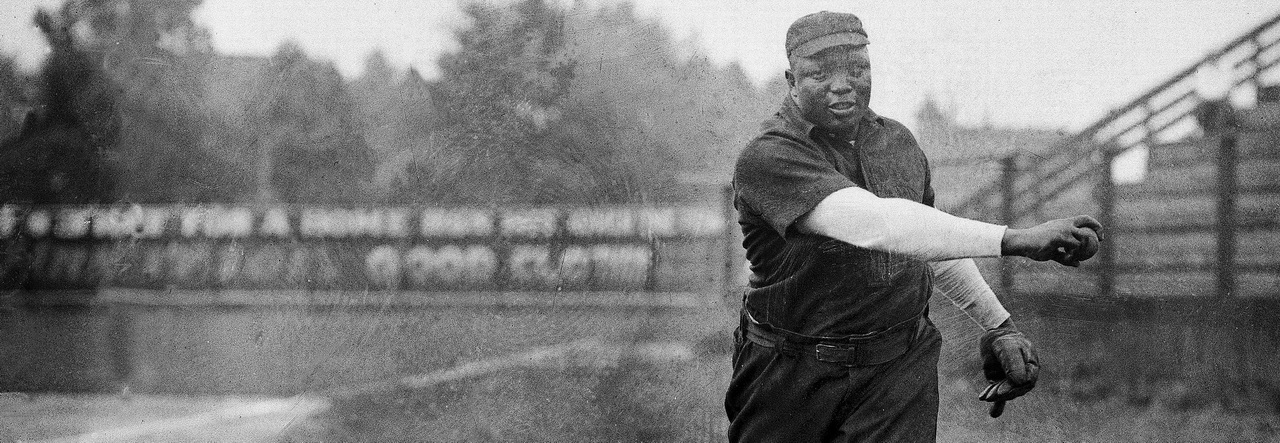
Fitting for this league, there is a ton of talent here, which makes some of the Tier sorting challenging.
We have a new defensive metric for outfielders: ARM, which is an estimate of the number of runs saved (or allowed) from their throwing arms.
#S Tier
| Lg | Tm | Name | Age | Slash | Other | Def |
|---|---|---|---|---|---|---|
| NL | IND | Oscar Charleston | 21 | 337/381/619 | 38 HR 130 RBI 101 R 46 SB | |
| AL | CLE | Tris Speaker | 23 | 312/397/631 | 35 HR 124 R 46 SB | |
| AL | SFS | Turkey Stearnes | 22 | 357/400/751 | 51 HR 125 RBI 108 R | -4.7 ARM |
| AL | LAA | Mike Trout | 22 | 306/392/617 | 40 HR 107 RBI 106 R 45 SB | .994 fPct |
The top of this list is easy: welcome to the WBL, Turkey Stearnes!
After that, it’s unclear. In one sense, maybe it’s just Stearnes? But Tris Speaker–as disliked as he is–had a great season. So, maybe it’s just the two of them? But it feels like Mike Trout and Oscar Charleston are certainly in a different class than the bulk of the A Tier.
I think this is a reflection of how great of a year Sternes had: consider him in an S+ tier by himself.
#A Tier
| Lg | Tm | Name | Age | Slash | Other | Def |
|---|---|---|---|---|---|---|
| NL | BRK | John Briggs | 21 | 276/377/557 | 32 HR | |
| NL | NYG | Willie Mays | 24 | 261/337/600 | 49 HR 112 RBI 107 R 24 SB | 14.5 ZR -4.7 ARM |
| AL | MCG | Julio Rodríguez | 20 | 315/347/661 | 42 HR | 2.30 RF -10.1 ZR |
| NL | PHI | Charles Rogan | 27 | 308/362/620 | 21 SB | 3.45 RF |
Joe Rogan played more CF than anything else (other than pitcher), so he’s listed here.
Willie Mays is Willie Mays, and is expected to spend most of his career here and above. The rest can be considered surprises: John Briggs was seen by many as a AAA player who would fail in his rookie season; Julio Rodríguez was an afterthought invite to Spring Training who seized the opportunity; and while it was expected that Rogan would be solid as a 2-way player, nobody foresaw this.
#B Tier
| Lg | Tm | Name | Age | Slash | Other | Def |
|---|---|---|---|---|---|---|
| NL | OTT | Carlos Beltrán | 25 | 258/332/533 | 35 HR 42 SB | 10 A |
| AL | NYY | Eric Davis | 25 | 263/344/538 | 34 HR 61 SB | |
| AL | POR | Ken Griffey, Jr | 20 | 292/326/568 | 33 HR | -7.8 ZR |
Sure. Eric Davis continues to struggle with injuries, Carlos Beltrán needs to put the ball in play a little more, and Ken Griffey, Jr. is only 20. This also reinforces the trade between Portland and Ottawa–Beltrán deserves his starting spot in the WBL, and Griffey, Jr. needed a fresh start.
Any of these three could move up, while Davis seems the most likely to crash out as his injuries continue to mount.
#C Tier
| Lg | Tm | Name | Age | Slash | Other | Def |
|---|---|---|---|---|---|---|
| AL | DET | Chili Davis | 25 | 243/318/481 | 14 A -15.5 ZR .930 dEff 0.5 ARM | |
| NL | HOD | George Gore | 26 | 254/389/440 | ||
| NL | HOU | Pete Hill | 20 | 274/347/453 | 2.38 RF | |
| AL | MEM | Reggie Smith | 24 | 270/333/545 | 34 HR | -5.0 ARM |
Here we get to set of CF that are always being questioned–they are good enough, but there’s always a lingering question about whether they’re actually the solution. This impacted George Gore the most, who was essentially a half-time player this year, and is least an issue for Pete Hill, given his age.
Chili Davis is solid, but his defense is far from solid, and Reggie Smith–like some others in the Memphis clubhouse–is under threat from a wave of emerging talent.
#D Tier
| Lg | Tm | Name | Age | Slash | Other | Def |
|---|---|---|---|---|---|---|
| AL | BAL | Paul Blair | 25 | 262/296/448 | 11.8 ZR 1.086 dEff | |
| NL | BBB | Curtis Granderson | 27 | 206/293/495 | 41 HR 21 SB | 2.97 RF -5.2 ARM |
| NL | HOM | Andrew McCutchen | 24 | 238/325/446 | 52 SB | .963 fPct |
| — | IND/ CAG | Jake Stenzel | 26 | 244/293/465 | 22 SB | 2.36 RF .917 dEff |
Curtis Granderson and Andrew McCutchen had their names penciled in almost every day … which leads to a question of why they escaped the criticism seen by the tier above? For Granderson, it is answered by his defense, power, and the fact that his deficiency–putting the ball safely in play–was a team-wide issue for Birmingham.
Jake Stenzel stopped hitting for power when he arrived in Chicago, cementing his place in this group, while Paul Blair is only here due to his exceptional defense.
#F Tier
| Lg | Tm | Name | Age | Slash | Other | Def |
|---|---|---|---|---|---|---|
| NL | PHI | Willie Davis | 22 | 233/282/391 | 21 SB | 16.3 ZR 1.095 dEff |
| NL | HOD | Jim Edmonds | 26 | 218/280/467 | .996 fPct 2.95 RF | |
| NL | KCM | Willie McGee | 26 | 246/279/418 | 40 SB | 11 A .969 fPct |
| NL | KCM | Dale Murphy | 23 | 193/274/456 | .971 fPct .936 dEff | |
| AL | CAG | Cristóbal Torriente | 18 | 186/237/247 | 24 SB | .993 fPct 1.069 dEff 0.4 ARM |
Willie Davis and Jim Edmonds do enough with their gloves to stick around somewhere, and Davis is certainly young enough to improve more offensively. The rest are a challenge: Willie McGee is in danger of losing his job, Dale Murphy has obvious power, but is clearly not best suited for CF, and then there’s Cristóbal Torriente, whose defensive impact is unmistakable, but is clearly overwhelmed at the plate at this point.
#Rookies
This is in incredible rookie class, with Stearnes (S Tier), and Rodríguez, Rogan, and Briggs (all A Tier). And, oh yeah, Dale Murphy way down in the F Tier Tier.
#Fielding Notes
We have our standard defensive stats here, with the leaders in bold and the worst performers in italics. Assists (A), more romantically referred to as Outfield Kills are runners eliminated on the bases. Range Factor (RF) measures the number of plays made per game–the higher the better. Zone Rating (ZR) attempts to credit players for plays other fielders missed and ding them for plays other fielders made–the higher the better, and it has the benefit of being comparative across the position. Defensive Efficiency (dEff) measures the rate at which an individual fielder contributes to outs being made on balls put into play, with any score over 1.000 being a net positive impact. Finally, Fielding Percentage (fPct) reflects the percentage of times a chance was handled without a mistake–if someone made no errors, their fPct would be 1.000.
Of these, Range Factor is the most susceptible to the impact of the pitching staff and the ballpark, although none of these defensive ratings are perfect.