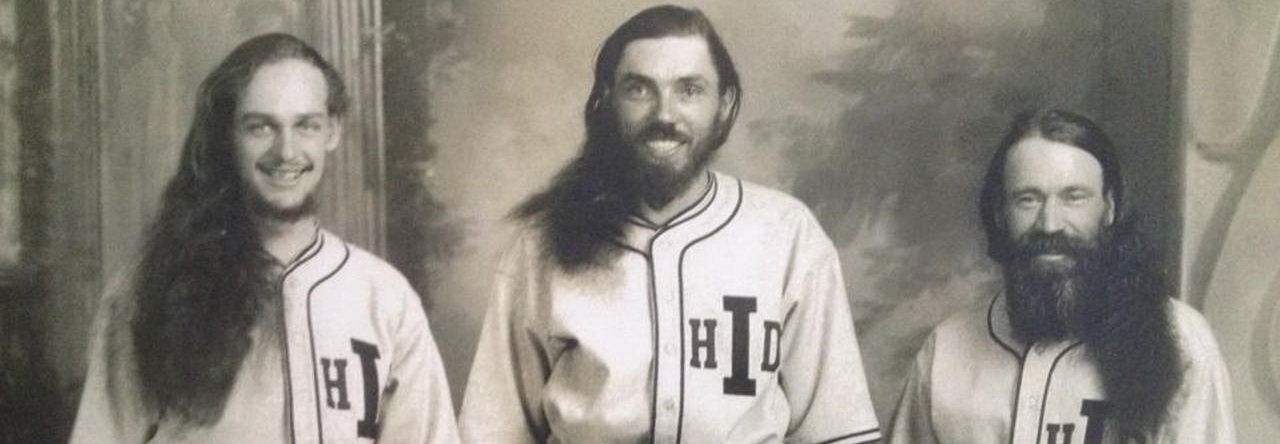
Baseball The Way It Never Was

Tag: Buddy Bell Page 1 of 5

98.1: Welcome to Week 1 & Opening Day Games

8 April, 2002

Welcome to Year III! Woot woot!

The Whirled Baseball League opened its third season on the first of April, 2002, but the weather proved a mightier force than the ump crying Play Ball! Four of the ten scheduled openers were impacted by the wet — Houston at Homestead, Birmingham at Brooklyn, Chicago at Baltimore and Los Angeles at Cleveland all went to the tarp, and all four were made up as day-night doubleheaders the following afternoon. Of the six games that did get played, three were interrupted by rain anyway.

After the first week, The Detroit Wolverines sit alone at 6-1. Nobody else in the league has more than five wins. But Detroit is doing it with mirrors: they have scored 43 and allowed 39, which should put them at about 4-3. So we’ll see what holds.

Awards

American League Player of the Week: Dick Allen, Chicago American Giants.

The 24-year-old third baseman opened the year 11-for-27 with three home runs, nine runs batted in and nine runs scored, a .407/.467/.963 line across thirty plate appearances.

National League Player of the Week: Roberto Alomar, Ottawa Mounties.

Fifteen hits in thirty-one at-bats, with two home runs earned Alomar the Award. In one of those early season oddities, he didn’t draw a walk or reach base any other way, so both BA and OBP sit at .484.

Opening Day Games

Kansas City 5, Ottawa 4.

Not a single home run was hit in this one, and it was still the best game of the day. It opened messily on both sides: Kansas City scored twice in the first, one of the runs on a passed ball, and Ottawa gave one straight back in the bottom half on a wild pitch. The Mounties drew level in the third, and there it sat.

Then the sky opened. A thirty-eight minute delay in the fifth ended both starters’ afternoons — Roy Halladay had kept Ottawa in it to that point — and Kansas City came out of the break with two runs in the sixth to lead 4-2.

Ottawa’s answer in the eighth was what lifted the game above the level of the mundane: Eddie Guardado came on for the Monarchs and Roberto Alomar greeted him with a line-drive double. Gary Carter followed with a double of his own — an absolute rocket that left the bat at 111 miles per hour — and Carlos Beltrán scored Carter on a single to center. Tie game, and Kansas City called on Lee Smith to stop the bleeding (which he did).

The winning hit travelled about ninety feet in the air. Doug Rader walked to open the ninth and, after Ted Simmons grounded into a force play, Kolten Wong singled Simmons to second. Frankie Frisch came on to pinch-run from there, tagged up to third on an Ozzie Smith fly ball to right, and scored when Cool Papa Bell beat out a weakly hit infield chopper that left the bat roughly 50 mph slower than Carter’s smash.

Craig Kimbrel set Ottawa down in order in the ninth for the save; the win went to Lee Smith for the eighth.

Benny Kauff finished the day with three hits for the Monarchs.

KAN 5 (Smith 1-0; Kimbrel 1 Sv; Guardado 1 BSv) @ OTT 4 (Dempster 0-1)
HRs: none.
Box Score

San Francisco 5, New York Black Yankees 2.

For six innings this was the pitchers’ duel the marquee promised: Lefty Grove struck out twelve over six and a third — tying the Sea Lions’ franchise record for a single game — and Andy Pettitte matched him nearly stride for stride with six shutout innings and eight strikeouts of his own. Through four the scoreboard was blank in both directions.

Lou Gehrig broke the tie in the bottom of the fourth, taking Grove over the wall with one out for the season’s first run at Yankee Stadium. That held until the seventh, when New York summoned Hoyt Wilhelm to protect the one-run lead.

Whoops. Turkey Stearnes led off the seventh and tied the game on the spot with his opening dinger of the season, and although New York handed Wilhelm a fresh lead in the bottom half — Don Mattingly driving in the go-ahead run for 2-1 — he gave that one back too, and then some. San Francisco put up three in the eighth. Reggie Jackson added a solo shot off David Robertson in the ninth for good measure.

So: blown save, loss, and four earned runs across two innings for Wilhelm, and even on opening day the questions start being asked about the Black Yankees’ bullpen. Trevor Hoffman got the win in relief, Joe Nathan handled the 8th, and Rod Beck finished it off — the Sea Lions’ pen had no such queries asked.

SFS 5 (Hoffman 1-0; Beck 1 Sv) @ NYY 2 (Wilhelm 0-1, 1 BSv)
HRs: SFS – Stearnes (1), Jackson (1); NYY – Gehrig (1).
Box Score

New York Gothams 9, Indianapolis 6.

The week’s largest crowd — 54,814 — was treated to seven home runs (1 by a starting pitcher) and four lead changes. Don Buford led off the bottom of the first by putting a Luis Padrón offering into the seats, and Brandon Crawford did the same in the third.

Indianapolis finally solved Christy Mathewson in the fourth: Johnny Bench went deep with two out, and moments later, with a man aboard, Buddy Bell turned a 2-1 deficit into a 3-2 lead. It lasted one inning. HR Johnson answered with a two-run homer in the fifth, and the Gothams tacked on a couple more in the sixth to lead 6-3 with nine outs to go.

Which is where it got strange. Luis Padrón, still in at the DH for the ABC’s, led off the seventh by homering off Masahiro Tanaka, and two batters later Oscar Charleston hit a two-run shot to tie it at six. Tanaka had blown the save and, in the way these things sometimes go, was about to be rewarded for it: New York retook the lead in the bottom half, and Buford’s second home run of the day, a two-run drive in the eighth, put it out of reach.

Mathewson struck out ten but walked five and got no decision. Tanaka got the win. Nobody got much peace, but the fans got a good show to start the season.

IND 6 (Mitchell 0-1) @ NYG 9 (Tanaka 1-0, 1 BSv; Wilson 1 Sv)
HRs: IND – Charleston (1), Bench (1), Bell (1); NYG – Buford (2), HR Johnson (1), Crawford (1).
Box Score

Detroit 7, Miami 5.

Charlie Root was the story at first — five and two thirds innings, no runs, no walks, and eleven strikeouts. Detroit’s lineup took its time with Miami starter José Méndez, opening with doubles from Bobby Wallace and Charlie Gehringer before Oscar Gamble finally got one out of the park in the fifth. Eustaquio Pedroso came on in relief of Méndez and it went no better — Al Kaline took him deep for two in the seventh, Gehringer in the eighth.

Miami got a two-run shot from Alejandro Oms and three hits from Gary Sheffield, but never was able to overtake the Wolverines.

MCG 5 (Méndez 0-1) @ DET 7 (Root 1-0; Henneman 1 Sv)
HRs: MCG – Oms (1); DET – Gamble (1), Kaline (1), Gehringer (1).
Box Score

Portland 7, Memphis 3.

Walter Johnson started, went three and a third (departing after a rain delay in the 4th), and hit a home run. Paul Molitor added a two-run shot of his own and Ken Griffey Jr had three hits and two runs batted in. Memphis answered through David Ortiz, who drove in three with a homer, and Johnny Briggs, who had three hits, but Portland held the lead throughout.

POR 7 (Trout 1-0) @ MEM 3 (Overmire 0-1)
HRs: POR – Molitor (1), Griffey Jr (1), Johnson (1); MEM – Ortiz (1).
Box Score

Philadelphia 9, Wandering House of David 5.

The ageless wonder that is Rico Carty opened the season by going 4-for-4 with a home run and Roger Peckinpaugh (sitting in at SS for Philadelphia for the suspended Jim Fregosi) drove in three, and Philadelphia was never really threatened once Hardie Henderson got through six. The House of David did get 2 homers from young John Beckwith and another from Anthony Rizzo. Jack Taylor gave up eleven hits in the loss.

PHI 9 (Henderson 1-0) @ HOD 5 (Taylor 0-1)
HRs: PHI – Carty (1), Peckinpaugh (1); HOD – Beckwith (2), Rizzo (1).
Box Score

Bits & Bobs

You Always Remember Your First
Houston’s Pete Hill is 0-for-17 with eight strikeouts. He posted a .800 OPS over 594 plate appearances last season, which makes him the furthest any regular has fallen from his own track. Memphis’s Herman Long is 0-for-10 since being signed to solve shortstop for the Red Sox, and Chicago’s Jay Bell and Birmingham’s Ron Fairly are also hitless.

The Root of Things
Nine and a third innings, seventeen strikeouts — the league lead — and not one walk for Detroit’s Charlie Root.

Singles? We Don’t Need No Stinking Singles.
Baltimore’s Gavy Cravath has six hits this season — three doubles and three home runs. Josh Gibson (Homestead), Manny Ramírez (Memphis), Oscar Gamble (Detroit) and Jack Clark (San Francisco) are also yet to hit a single this season.

Swing, miss, duck.
The Sea Lions’ Lefty Grove has sixteen strikeouts in eleven and a third innings — and a 6.35 earned run average and 0-1 record to show for it.

Who Needs the DH?
Five homeruns came from pitchers during the opening week. 2 came from Charles Rogan (Philadelphia), which isn’t terribly surprising, but Walter Johnson (Portland), Luis Padrón (Indianapolis), and Jim Whitney (Miami) all joined in as well.


Year III Season Preview: Portland Sea Dogs

State of the Franchise

team logo

Portland won the Cum Posey Division in 2000 and finished last there the following year, ending 2001 at 71-91, 32 games out. Nobody in the Pacific Northwest thought it could fall apart that fast, that hard.

The collapse was on the offensive side, and it wasn’t one man having a bad year. Gil Hodges led the club with 38 home runs and was worth −1.4 WAR, which takes some doing. Bobby Murcer hit 33 and finished at −0.4. Kiki Cuyler and Cliff Lee also went negative in real playing time. The Sea Dogs finished last in most offensive measures while 4 different men cleared 30 homers, empty totals boosted by the extreme nature of the league last season.

So they sold everything with an age on it. Rogers Hornsby went to the Black Yankees for Jake Peavy and a 1st. Buddy Bell went out for Robin Ventura and some arms. SS Jim Fregosi is gone, as are half the bullpen.

What’s left is young, perhaps recklessly so. Joseíto Muñoz is 20 and in the rotation. Walter Johnson (the clear ace) and Bert Blyleven are 21. Joe Mauer caught 125 games and took the organizational MVP at age 23. Ken Griffey Jr is 21 and already the best bat here.

Nobody in Portland is selling 2002 as a contention year, but getting back on track is the highest priority for the organization.

2001 Revisited

We opened last spring asking for a deep playoff run once again, with championship contention. They lost 91 games. There’s no reading of that which doesn’t make it the worst call we’ve ever printed.

The best case wanted everyone behind Johnson to step up — Blyleven as a real number 2, Dizzy Trout as a more consistent rotation option, even Elmer Brown converting into a starter out of the pen, and 1st-round pick Walter Ball stepping straight in. Ball delivered: a 4.26 ERA over 141 innings, which against a league that gave up 5.38 is genuinely good, and enough for the organizational Pitcher of the Year. But he missed half the season through injury. The rest were fine (Blyleven, Trout) or bad (Brown, others).

The worst case reads like it was written afterward. Hornsby and Hodges show the effects of age, and the OF regresses towards absolute mediocrity. Hodges hit 208/292/461. Murcer hit 250/311/489. Hornsby played well enough to be traded in July and is a Black Yankee now.

Johnson is the part nobody should skip past. He threw 214 innings with a 4.28 ERA and 182 strikeouts, led the club at 4.6 WAR, and won a Gold Glove on the mound. He is 21, and looks quite likely to dodge the standard concerns about consistency and injury that accompany young arms.

Key Changes

In: Jack Billingham (IND); Royce Clayton (SFS); Robin Ventura (IND)
Out: Buddy Bell (IND); Trevor Hoffman (SFS)

Opening Day Rookies: Chuck Klein; Willard Schmidt

Best Case for 2002

The rotation arrives ahead of schedule. Johnson goes from very good to the best arm in the league. Ball’s 4.26 turns out to be who he is, over a full year this time. Muñoz holds a rotation spot and Peavy — who missed all of 2001 after coming over in the Hornsby trade — throws 150 healthy innings.

And, the bats do their part. Griffey starts taking a walk. Ventura steadies 3B. Abreu turns a 90-plate-appearance cameo into an everyday corner. And, perhaps, even Vladimir Guerrero, 21 and knocking from Vancouver, forces his way in.

Portland doesn’t win anything in 2002, but it could be a year the team can see the path back to where they were in 2000.

Worst Case for 2002

Young pitching does what young pitching does. An elbow goes, Peavy’s lost year becomes a lost career, and Muñoz can’t stay healthy while Johnson drifts towards league average.

The bats stay put, which is the more likely problem, because there’s no internal fix waiting. SS is Hughie Jennings and Clayton and hope. 2B is Paul Molitor, who by common agreement can’t play there. Both corner OF spots are competitions between men who were below average last year.

And the real challenge is there isn’t much left to dump — this is the hand Portland drew, so regression can quite easily slide into apathy if no hope arrives.

Key Questions

  • How long does this rotation stay together? Johnson, Ball, Blyleven and Muñoz are 21, 26, 21 and 20, and 3 of them have already thrown 140 or more WBL innings. That’s either the best young rotation in baseball or a list of injuries waiting to happen.
  • Does Griffey learn the strike zone? 292/326/568 with 33 homers at 21, and 23 walks in the whole season. He was worth 0.8 WAR while looking like the best hitter on the roster. This is an organization that has twice now chosen the on-base bat over the louder one — Mauer over Iván Rodríguez, Bell over Adrián Beltré, but Griffey remains on the periphery of that approach.
  • Who gets the ball in the 9th? Hoffman is in San Francisco. John Wetteland posted a 6.75 after arriving in Portland and a 9.90 before it. Huston Street was a waiver claim. Jack Billingham is the only reliever here who was reliably fine, and nobody has called him the closer.

Roster Evaluation

Tier = the player’s 2001 positional grade (S best → F worst; color coded S A B C D F). Bold names carry a substantive WBL track; italic names are pure projection — a hope, not a grade — with no qualifying track to anchor them.

PosPlayers
CMauer C · Ashby
1BHrbek B · Hodges F
2BMolitor C · Frey
SSJennings · Clayton
3BVentura · Garrett
LFMurcer D
CFGriffey Jr B
RFAbreu · Klein
DHHodges F
SPJohnson C · Ball C · Blyleven D · Muñoz D · Peavy
RPBillingham C · Street F · Wetteland F · Springer · Schmidt

Mauer is the quiet argument for the whole approach: a catcher who hit 278/360/463 with 31 steals, made the AL All-Star team and took the organizational MVP on a last-place club, at 23. Portland kept him over Rodríguez and has had no reason to revisit it.

Talent Ratings

WBLMinors
Raw PowerSP Dizzy TroutRF Hugh Duffy
Batting Eye3B Wayne Garrett2B Jack Crooks
ContactSS Hughie JenningsLF Riggs Stephenson
Running SpeedSP Walter JohnsonLF David Hulse
Base StealingSS Hughie JenningsLF David Hulse
IF DefenseSS Hughie JenningsSS Bobby Wine; 3B Lee Tannehill
OF DefenseRF Bobby AbreuCF Gary Pettis
StuffRP John WettelandRP Harry Harper
ControlSP Bert BlylevenRP Jack Wisner
VelocityRP Huston Street; RP John WettelandRP Migel Puente; SP Joaquin Benoit

Best In The Minors

RankAgePosName
1 (5)21RFHugh Duffy

Others: IF Jack Fournier, P José Berríos, P Harry Harper, C Frankie Hayes.

Graduated to the active roster since the ranked list: Chuck Klein (83).

One ranked name, and he’s the 5th-best prospect in baseball. Hugh Duffy is 21 and slated as a WBL starter in a corner Portland can’t currently fill, which is convenient. Alongside him at Vancouver is Vladimir Guerrero, also 21, who came over in the Iván Rodríguez deal and is off the ranked list entirely — the kind of omission that either looks foolish in 2 years or explains itself. Fournier was a high draft pick, and should have a career, but he’s only 16 — child labor laws be damned.

Superlatives

MostLeast
AgeRuss Springer, 38Jack Fournier, 16
HeightWalt Bond, 6’7″Nemo Leibold, 5’6″
OPSErnie Krueger, 1.059 (AAA)Fred Dunlap, 0.500 (AA)
HRGil Hodges, 38Gary Pettis, 1 (AA)
SBHughie Jennings, 45 (AAA)
WAR (bat)Walt Bond, 3.9 (AAA)Fred Dunlap, -1.8 (AA)
WWalter Johnson, 13
SVHarry Matuzak, 20 (AAA)
ERAJoe H Coleman, 2.94 (A)Kris Medlen, 6.60 (AAA)
WAR (pit)Walter Johnson, 4.6Kris Medlen, -1.0 (AAA)

Stats across all levels, 2001. 200 PA / 75 IP min (SV: all pitchers). Non-WBL levels tagged.

Year III Season Preview: Indianapolis ABC’s

State of the Franchise

team logo

Indianapolis sees a path to victory based on roster depth and flexibility. The challenge is they still need quality — a gap the organization has been addressing, bit by bit, and optimism runs high for the ABC’s in 2002.

The instinct is as old as the franchise, with the most discussed impact being Indianapolis’ commitment to being the only club in the WBL that runs a 6-man rotation by choice. And they’ve been solid at addressing their holes — the OF was a churn of bodies in 2000, less so in 2001, and heading into 2002, the holes in the roster have shrunk considerably. Given they were in the postseason last Fall a year ahead of schedule, the optimism may be warranted.

The core is exceptional: Oscar Charleston in center, Johnny Bench behind the plate, Joe Morgan at second, Luis Padrón on the mound — 21, 26, 22 and 22 years old. Of the 4, Padrón is both the highest risk (pitchers, don’t you know), and the most important: the offense hasn’t shown that it can carry the club on its own, and Padrón’s dependable ace-level start is needed. The ABC’s are working on it, though: 3B was mediocre last year (no insult intended for the workmanlike production of Chris Sabo), so they gave up the most precious commodity in the WBL — pitching talent in the shape of Tom Glavine, George Medich and Jack Billingham — to Portland for third baseman Buddy Bell (repeated WBL failure Robin Ventura was included as well, but that was as much a favor to him to get a fresh start as anything else; of course Indianapolis was his prior fresh start).

Billingham’s inclusion is potentially telling. Rob Dibble led a carnival ride of a bullpen (Dibble saved 24 games with a 4.87 ERA and 29 walks in 44 innings) with Billingham being the single steady arm. The move signals faith in the options in hand, but we’ll see.

2001 Revisited

The bar for 2001 was modest: playing .500 ball would be a nice step; doing so while nurturing some talent for the future would begin to raise hopes. Indianapolis went 80-83, missing the bar, but qualifying for a Wild Card series anyway — 2nd in the Marvin Miller Division, in October a year early.

Three things came together. Padrón, a curiosity in last year’s preview, went 23-3 with a 3.22 ERA and a 1.04 WHIP at 22 and took the Brock Rutherford Award. Charleston hit 337/381/619 at 21 with 38 homers and 46 steals, and led the WBL with 14 triples. Morgan hit 306/425/612 in 104 games and then was hurt in September, essentially dooming the playoff run.

Padrón’s emergence masked some serious questions: the ABC’s were banking on the continued development of Doc White and Willie Mitchell. Both regressed a bit: White posted a 6.55 ERA and Mitchell walked 55 in 118 innings.

Speaking of regression … Bench was arguably the best backstop in the WBL in 2000; in 2001, he still led the club with 46 homers, but hit only .238, dropping about 3-and-a-half WAR from 2000. A catcher producing a 2.3 WAR still has immense value, but there is a significant gap there, and it’s not clear which is more likely for his career.

Key Changes

In: Buddy Bell (POR); Jeff D Robinson (NYY)
Out: Jack Billingham (POR); Ed Charles (NYY); Robin Ventura (POR)

Opening Day Rookies: Norm Charlton; Luke Gregerson; Billy McCool; Jeff D Robinson; Ed Swartwood; Steve Yeager

Best Case for 2002

Most of all, Padrón repeats. But, also, Bench bounces back, Morgan stays on the field for a full year, and Charleston at 22 is what he was at 21. Bell settles third base and the supporting cast holds its shape: George Foster‘s 38 homers, Joey Votto‘s 36 alongside a Gold Glove, Bob Bescher stealing 80 bases out of the bottom of the order.

And the ninth inning resolves itself in-house. Luke Gregerson, Norm Charlton or 19-year-old Billy McCool takes the job, Dibble’s walks come down, and a Wild Card team turns into a problem for the rest of the division.

Worst Case for 2002

The bullpen remains an unpredictable ordeal, Morgan’s health goes again, or Padrón’s 235 innings at 22 prove a serious error in judgement.

Barry Larkin doesn’t hit, shortstop goes back on the want list, and the lineup turns out to be homers and walks stapled to a lot of empty at-bats: 4 of the 9 regulars hit .246 or worse last year.

Key Questions

  • Where does the eighth inning come from? Behind Dibble are Pedro Strop, Gregerson, Charlton, McCool and Jeff D Robinson, a set of live arms with a combined big-league record of nearly nothing. Rob Murphy, the other half of last year’s back end, posted a 5.66 and opens this season at Triple-A.
  • Does the 6-man rotation survive? I mean, at some point this stops being a question and just the operating norm for Indianapolis. But it’s still a bit of a curiosity, and last year’s final form was really more akin to 4 starters taking irregular turns behind Padrón and Johnny Cueto. Cueto threw 212 innings of 4.62 ball; behind the 2 horses sit veteran Eppa Rixey (5.16 in the WBL, 3.88 at Triple-A), Mitchell, White, and 20-year-old Edward Nolan, who struck out 94 in 83 innings while walking 52.
  • Does the offense hold a second season? It raked, and it did it strangely: Bench at .238, Adam Dunn at .207 with 36 homers and 30 steals, Foster at .259 with 38. The power and the on-base are real, the batting averages are not. That means the margin for error is pretty slim, and any regression or dip could tank the offense entirely.

Roster Evaluation

Tier = the player’s 2001 positional grade (S best → F worst; color coded S A B C D F). Bold names carry a substantive WBL track; italic names are pure projection — a hope, not a grade — with no qualifying track to anchor them.

PosPlayers
CBench B · Yeager
1BVotto C
2BMorgan S
SSLarkin D · Menke
3BBell D · Sabo D
LFBescher D · Dunn D
CFCharleston S
RFFoster C · Swartwood · Mondesi
DHDunn D
SPPadrón S · Cueto C · Rixey · Nolan · White F · Mitchell · Luque
RPDibble D (CL) · Gregerson · Charlton · McCool · Robinson · Strop

One line in that grid is doing 2 jobs. Padrón made 33 starts on the mound in 2001 and also started 23 games at third base and 14 at second, taking 259 plate appearances — a genuine 2-way season.

Talent Ratings

WBLMinors
Raw PowerC Johnny BenchCF Dave Henderson
Batting Eye2B Joe Morgan3B Harlond Clift
ContactRF Oscar CharlestonLF Pete Rose
Running SpeedRF Raúl MondesiSS Tex McDonald; LF Gary Redus
Base StealingSS Barry LarkinLF Vince Coleman; CF Sam Mertes
IF DefenseSS Barry Larkin1B Sean Casey
OF DefenseRF Oscar CharlestonRF Nelson R Cruz
StuffRP Rob DibbleRP Rob Murphy
ControlSP Tommy BondRP Joe Moeller
VelocityRP Pedro StropRP Bobby Jenks

Best In The Minors

RankAgePosName
1 (38)21LFDave Winfield
2 (48)20SPJim Maloney
3 (82)21SPPete Schourek
4 (84)241BSean Casey

Others: 3B Bob Aspromonte, SS Donie Bush, 3B Oliver Marcell, P Brad Radke.

That is a short list. A year ago it ran 10 deep and led with 2 teenage arms; Edward Nolan has graduated into the rotation and Foster into the outfield, while Ventura and Tom Glavine — 4th and 7th on that list — went to Portland in the Bell deal. Dave Winfield, the 15th pick of the 2001 draft but nearing readiness for the WBL level already, is the bat that replaced them at the top, and Jim Maloney is still the arm to watch, though at 20 he’s being asked to move from the bullpen into a rotation. Sean Casey is a big-league-ready first baseman with Votto in front of him.

What’s underneath is infield-shaped and a year or 2 out: Aspromonte and Marcell are the 3B pair, Bush the in-house answer at shortstop, Radke the organizational Minor League Pitcher of the Year. And for the sentimental, Pete Rose, is playing out the string at the Cincinnati affiliate, having gotten his WBL looks and not hit a lick in them. But, you know, don’t bet against him.

Superlatives

MostLeast
AgeEd Swartwood, 35Ricky Gutiérrez, 18
HeightKameron Loe, 6’8″Donie Bush, 5’6″
OPSAvisaíl García, 1.036 (AAA)Matt Chapman, .448 (A)
HRJohnny Bench, 46Johnny Temple, 0 (AA)
SBBob Bescher, 80
WAR (bat)Oscar Charleston, 5.0Johnny Temple, −1.3 (AA)
WLuis Padrón, 23
SVRob Dibble, 24
ERABrad Radke, 3.12 (A)Doc White, 6.55
WAR (pit)Luis Padrón, 7.8Howard Ehmke, −0.0 (A)

Stats across all levels, 2001 season. 200 PA / 75 IP minimum. Non-WBL levels tagged in parentheses.

TWIWBL 97.2: The Spring Training Trades

With just over a week left in Spring Training, we get to see how panicked some teams are, and how much they want to shake things up before opening day.

Unsurprisingly, we start with the Black Yankees and their perennial win-now mentality.

#The Black Yankees Add MI

NYY sends RP Aroldis Chapman, IF Mark Grudzielanek, 2nd Round Pick to CLE for IF Joe Sewell, IF Bill Phillips.

This is more fallout from the Grant Johnson trade in some ways: Sewell will have every shot at displacing Derek Jeter at SS for New York, and the team looks set to juggle their middle infield between those two, Robby Thompson, and Rogers Hornsby.

For Cleveland, they took a blocked talent–Sewell was never displacing Arky Vaughan–and converted it into a great bullpen arm and a valuable pick.

#The Red Sox Have a Rotation

Unsatisfied with just adding Don Drysdale and Red Ruffing, Memphis went shopping on the West coast.

MEM sends IF Dobie Moore, OF Dwight Evans, P Mike Witt to LAA for P Tom Seaver, IF Xander Bogaerts, IF Andrelton Simmons, C Mark Salas.

Clearly, the spine of the deal is Seaver for Moore, but this one has a lot of repercussions: Memphis continues to weed out some of its OF talent, and takes a gamble on Seaver continuing to develop at the WBL level. SS for Memphis is now a scramble between the two new bodies, Adam Everett, and Bud Harrelson; while for Los Angeles, this settles at least half of their middle infield question, and opens the door for some more arms to prove themselves in the rotation as they look to the future.

#CAG Settles at SS. Maybe.

CAG sends U Trea Turner & IF Yoán Moncada to HOU for IF Travis Jackson.

Jackson is clearly ready for WBL time–here he may actually get it; in return HOU gets a prospect in search of a position and one of the ST surprises in Moncada.

#Monarchs Make Moves

KAN sends OF Dale Murphy & IF Carlos Baerga to NYG for OF Benny Kauff.

A classic now v later move. Murphy is desperately in need of a change of scenery, and Baerga remains 4-5 years away, while Kauff should help deepen a lineup in need of power.

But Kansas City wasn’t done.

KAN sends P José Rijo, P Jeff Pfeffer & 1st Round Pick to LAA for 3B Doug Rader.

The Albert Pujols at 3B experiment looks to be officially over, with Los Angeles clearly reacting to the loss of Seaver. Expect David Wright and/or Pedro Álvarez to inherit the hot corner for the Angels.

And this led to another move for Los Angeles.

LAA sends P Brett Anderson & 3rd Round Pick to HOD for IF Richie Hebner, OF Cy Williams & 2nd Round Pick

Los Angeles has now gotten rid of their 2 best pitchers from last season: this is either great faith in their stockpiled arms or pure madness.

#Easy as A-B-C

IND sends P Tom Glavine, P George Medich, P Jack Billingham & IF Robin Ventura to POR for IF Buddy Bell.

Indianapolis gets an all star and former gold glove winner to take over at the hot corner, while Portland lands a lot of future potential, headlined by the 19 year old Glavine.

This deal set the stage for the next one.

IND sends IF Ed Charles & P Dan Plesac to NYY for P Jeff D. Robinson & P Jack Armstrong.

The Black Yankees get a decent bench piece for the price of a Rule V selection–which seems fair to all. The other two arms are essentially fliers–Armstrong back to his seed franchise, Plesac as a veteran LHP hedge.

#Memphis Not Done Yet

MEM sends IF Candy Jim Taylor, P Nathan Eovaldi & 1st Round Pick to BRK for OF John Briggs & 3rd Round Pick.

This one has some heads shaking. Memphis and Brooklyn team up again, with the Red Sox landing what they hope is the CF of the future, and Brooklyn adding some minor league talent and a coveted #1 pick.

Briggs has been doubted every step of his career–this is just another chance for him to prove the haters wrong. For Brooklyn, it clears CF for Duke Snider, and also means their OF glut can now route into the DH for the year.

#BB to BBB

BAL sends IF Asdrúbal Cabrera, P Bill Byrd, IF Roy Smalley Jr. & 3rd Round Pick to BBB for P Steve Avery, P Gio González, P Warren Spahn, OF Curt Flood & 1st Round Pick.

An interesting deal.

In 7 years, Baltimore may see this as a massive win–if Avery develops, if González becomes a rotation starter, if the 1st Round Pick pans out and, perhaps most of all, if a change of scenery reboots Spahn’s career.

That’s a lot of if’s. In the meantime, Birmingham gets a potential answer to their SS woes and a front of rotation arm that excels in limiting homeruns, the Black Barons’ current Achilles’ heel.

TWIWBL 89.3: Off Season Review – Portland Sea Dogs

71 - 91, .438 pct.
5th in Cum Posey Division, 32 GB

Overall

Wow. From first place to a very, very distant last place in a single season.

Portland is a young team with a lot of good talent, but they remain a few years away from really coming together. There are some pieces that are good enough that, if they take leaps forward, could carry the entire team (Walter Johnson and Ken Griffey, Jr come to mind), but the most likely thing is another year of slogging as they figure it out.

Johnson, Griffey, Jr, Joseíto Muñoz, Bert Blyleven, Joe Mauer, and Johan Santana are all 23 or younger, so there is some real hope here.

Most of the issues are on the offensive side, where the Sea Dogs were dead last in most measures and where it was a challenge to find much optimism beyond Kent Hrbek, Mauer, and Griffey Jr.

What Went Right

Those three. Hrbek hit for power and led the team with 96 RBIs; Griffey, Jr had as good a year as good have been hoped for, slashing 292/326/568; and Mauer posted an .823 OPS as an everyday catcher.

The acquisition of Bobby Abreu looks solid, as the young OFer slashed 257/389/527 in a late season callup.

And that’s about it on the offensive side.

The rotation has all the potential in the world, with a front four of Walter Johnson, Walter Ball, Joseíto Muñoz, and Bert Blyleven. Of those, however, only Ball had an actually solid year, and he missed half the season with injuries.

And … yeah … that’s about it.

ALL STARS

Rogers Hornsby (Subsequently traded)
Joe Mauer
MAJOR AWARDS

Buddy Bell: AL 3B Gold Glove
Bert Blyleven: AL P Gold Glove
RECOGNITIONS

Kiki Cuyler: AL Over 30 Team
Ken Griffey, Jr: AL 21 & Under Team
Walter Johnson: AL 21 & Under Team
Joseíto Muñoz: AL 21 & Under Team
ORGANIZATIONAL AWARDS

Joe Mauer, MVP
Walter Ball, Pitcher of the Year
Walter Johnson, Heart & Soul
Joseíto Muñoz, Fan Favorite

Joe Coleman, Minor League Pitcher of the Year
Chuck Klein, Minor League Player of the Year

What Went Wrong

Bobby Murcer, Gil Hodges, Kiki Cuyler, and Cliff Lee each posted negative WAR’s in over 125 PAs. Hodges managed that while leading the team in homers with 38, which means he did, essentially, nothing else.

The middle infield was a mess for most of the year, with Paul Molitor–who clearly doesn’t belong at 2B–leading a weak group. Hughie Jennings, Eddie Yost, Elvis Andrus, and Willie Randolph all struggled mightily after being given a shot, and it’s all pretty wide open.

The bullpen was a mess all year, with Trevor Hoffman struggling as the closer, John Wetteland being horrible after his acquisition, and a rotating crew of Frank Williams, Elmer Brown, Dick Jones, and a few others being unable to hold their spot.

Dizzy Trout and Jerry Koosman both struggled a bit as starters.

Transactions

March

IF Adrian Beltré, OF Denard Span, P Atlee Hammaker, P Pedro Ramos & 2nd Round Pick to OTT for OF Ken Griffey, Jr. & 4th Round Pick.

It’s a lot to give up, but Griffey, Jr delivered this year. Ultimately, the deal will be judged by the pick and Beltré, but you can’t argue too much against it.

C Iván Rodríguez, P Jon Matlack, OF Adolis García, OF Al Oliver, 1st Round Pick, & 4th Round Pick to MCG for IF Paul Molitor, OF Vladimir Guerrero, C Alan Ashby, & 2nd Round Pick.

This was a blockbuster, but it makes sense: the Sea Dogs were committed to Mauer and the rest was about equaling out potential value. A lot hinges on whether Molitor is able to find a position. With Guerrero still a year or 2 away and the picks involved, it will take a while to evaluate this one.

July

P Mike Cuellar to BAL for P John Wetteland & 4th Round Pick.

Wetteland was so bad after his arrival that this has to be considered a loss at this point.

IF Rogers Hornsby & P Pascual Pérez to NYY for IF Willie Randolph, P Jake Peavy, P Bill Monbouquette, & 1st Round Pick.

Assuming Peavy stays healthy and the Sea Dogs don’t fumble the pick, this is a win given how far away from contention Portland is and Hornsby’s advancing age.

August

IF Rafael Palmiero, P Mark Melancon, IF Jim Fregosi, & OF Harry Hooper to PHI for P LaTroy Hawkins, P Dave Stieb, IF Pat Meares, P Jaret Wright, OF Bobby Abreu, & 2nd Round Pick.

This trade kept getting bigger and bigger, and ended up doing a lot of things at once. Palmiero and Abreu were each blocked in their organizations, so that part makes sense; the rest was a fire sale as Philadelphia cemented their playoff drive. If Stieb and/or Hawkins can deliver at the WBL level, this is probably a win for Portland.

Positional Overview

C

Joe Mauer had better not get hurt … last year it felt like Cliff Lee would be a solid backup, but Lee flopped, and the backup job is up for grabs, with Ernie Krueger having the inside track on it, although Alan Ashby will also be given a look in Spring Training.

1B

Kent Hrbek has this locked down, and while the Sea Dogs wish the big guy would take that slight step forward, he remains a solid choice.

Gil Hodges will be Hrbek’s primary backup unless Portland moves on from him, in which case Mickey Vernon or veteran Don Baylor seem the most likely call-ups.

2B

The question is how long can Portland accept Paul Molitor‘s defensive deficiencies. Assuming it’s a while more, Portland is likely to keep a glove-first option as a backup infielder, likely Wayne Garrett or Tom Satriano or, if they are still just looking for memes, Greg Litton.

SS

The Sea Dogs really wanted Hughie Jennings to make a claim here, but he didn’t, not really. So that opens up some competition with Cobe Jones and Elvis Andrus.

3B

Buddy Bell was quite bad over the first few months, but rebounded well, and remains the favorite here, although Eddie Yost has his supporters in the organization, as does, despite his significant WBL struggles, Miguel Sanó.

LF/RF

Bobby Murcer struggled a bit this year, but remains the incumbent. At the other corner, it’s far more open: Bobby Abreu will get a long look, but Ruben Sierra and the massively disappointing Kiki Cuyler also have a shot, as does, perhaps, young Chuck Klein.

Two 20 year olds are the future here: Vladimir Guerrero and Hugh Duffy need some more time, but are both slated as WBL starters.

CF

This is Ken Griffey, Jr‘s spot. Heck, this is essentially Griffey, Jr’s team, given fellow youngster Walter Johnson‘s comparative reticence.

Gary Pettis will always make an argument as a defensive option, and Lloyd Moseby has some legitimate WBL talent.

DH

I guess this is Gil Hodges, but he really was poor this season. Don Baylor and Ruben Sierra have a chance to make the team here, and maybe it’s actually just where Molitor ends up?

SP

Nothing is more promising or more likely to disappoint than young pitchers, right?

Joseíto Muñoz is 20, Walter Johnson and Bert Blyleven 21, and rookie Walter Ball the old man of the staff at 26. But there is so much talent in those 4, and if either Jake Peavy or Johan Santana can step forward, it has the potential to be as good a rotation as there is in the WBL.

It also has the potential to be profoundly average with long stints on the DL. So.

Dizzy Trout and Joe Coleman are worthwhile as long-term projects as well.

RP

This is ugly. Trevor Hoffman cannot find a decent performance level, John Wetteland was miserable, and the people pulled in for trials–Frank Williams, Elmer Brown, Dick Jones–were equally bad.

Hoffman and Wetteland have elite stuff, but just seem overmatched at this point, They’ll get another year to try, though.

Draft Outlook

DRAFT PICKS

1st Round: 3
2nd Round: 1
3rd Round: 2
4th Round: 0
5th Round: 1

A big draft for the Sea Dogs, with 6 picks in the first 3 rounds. There are a few WBL ready arms, aside from that, the lower end of the farm system could just be upgraded across the board.

TWIWBL 87.16: The Gold Gloves

We previewed the Gold Gloves in August, but now it’s time to do the real thing, one per position per league. We’ll go through them first, then list the award recipients at the end.

I do believe in defense mattering over time, as such, we’re using an 800 IP minimum for the GG awards. For each position, we’re listing the top 3 in each league, AL followed by NL.

We have our standard defensive stats here, with the leaders in bold and the worst performers in italics. Range Factor (RF) measures the number of plays made per game–the higher the better. Zone Rating (ZR) attempts to credit players for plays other fielders missed and ding them for plays other fielders made–the higher the better, and it has the benefit of being comparative across the position. Defensive Efficiency (dEff) measures the rate at which an individual fielder contributes to outs being made on balls put into play, with any score over 1.000 being a net positive impact. Finally, Fielding Percentage (fPct) reflects the percentage of times a chance was handled without a mistake–if someone made no errors, their fPct would be 1.000.

Of these, Range Factor is the most susceptible to the impact of the pitching staff and the ballpark, although none of these defensive ratings are perfect.

Outfielders also have Assists (A), more romantically referred to as Outfield Kills are runners eliminated on the bases and Arm Runs (AR), which measures the net runs gained on an outfielder’s throws, including runner advancements.

Finally, catchers, who are really their own thing, also have RTO% (the percentage of runners thrown out trying to steal, abbreviated as RT), PB (passed balls), Framing Runs (the number of runs gained by the catcher’s positioning), and cERx, which reflects the ERA while the catcher was behind the plate compared to the overall staff ERA. A cERx below 1 means the catcher was better than the rest of the staff, above 1, worse.

#C

LgTmNameIPfPctRFZRdEffRTPBcERxFR
NLINDJohnny Bench1144.9959.31.31.1936111.037
HODElrod Hendricks923.9948.33.81.144091.015
NYGBuster Posey1095.9968.90.41.003580.9610
ALPORJoe Mauer1103.9969.53.51.043961.015
NYYThurman Munson1122.9959.82.31.003550.964
MCGIván Rodríguez1104.9989.85.71.0546170.982

So, what is a catcher’s primary duty? Helping their staff, controlling the running game, and then, a somewhat distant third, making their own defensive plays.

The choice in the AL is pretty obvious, in the NL, I think it comes down to how much do you weigh Posey’s ability to frame pitches, and his ~150 more innings played than Hendricks.

#1B

LgTmNameIPfPctRFZRdEff
NLKCMBoog Powell1105.9969.13.41.02
HODAnthony Rizzo828.9958.70.81.02
INDJoey Votto10721.0008.45.11.04
ALDETHank Greenberg1159.9968.32.51.02
PORKent Hrbek1007.9958.61.31.03
MEMBill White886.9939.10.51.01

Again, one choice is pretty clear–the NL this time.

In the AL, it’s much closer, but Greenberg makes some plays that Hrbek just doesn’t.

#2B

LgTmNameIPfPctRFZRdEff
NLKCMRobinson Canó1134.9904.611.01.06
BBBCupid Childs1022.9834.57.31.09
PHIChase Utley1173.9944.913.71.07
ALDETCharlie Gehringer971.9894.9-10.70.94
BALMiller Huggins923.9874.310.81.10
MCGCookie Rojas877.9934.4-3.30.97

These are two relatively easy choices. And, there is a question of what’s going on in the AL, where almost everyone has a negative ZR.

#SS

LgTmNameIPfPctRFZRdEff
NLNYGBrandon Crawford1046.9664.211.41.07
INDBarry Larkin911.9754.79.01.07
KCMOzzie Smith1188.9924.712.21.06
ALSFSDick Lundy934.9874.510.81.06
CAGFreddy Parent952.9785.013.61.06
CLEArky Vaughan1143.9824.213.41.09

In the NL, it’s another clear choice: while Smith and Crawford both make the sensational plays, Smith makes all the plays.

The AL is much, much closer and there’s really not much to choose from between Parent and Vaughan. As such, we’ll go with the player who stayed on the field more.

#3B

LgTmNameIPfPctRFZRdEff
NLOTTAdrián Beltré1055.9742.6-0.81.00
BRKRon Cey1138.9752.56.01.03
PHIScott Rolen1155.9702.35.01.06
ALPORBuddy Bell1169.9682.58.01.05
CLEEvan Longoria1148.9632.24.81.04
NYYMike Schmidt1140.9582.45.31.03

The hot corner is a challenge: everyone makes 2, 2 1/2 plays a game, so RF is less useful, although Beltré’s 2.6 does stand out, as does Longoria’s more limited mobility. But it means fPct–as a proxy for errors–and dEff rise in importance. In the AL, while it’s not by a mile, I think Bell is the clear choice while in the AL, it ends up being between Cey and Rolen, with the final edge going to The Penguin.

#LF

LgTmNameIPfPctRFZRdEffAAR
NLINDBob Bescher839.9891.9-4.80.962-2.8
PHISherry Magee839.9941.74.81.041-2.3
BRKRoy White1152.9921.910.31.076-1.0
ALCLEJohnny Bates1018.9782.08.81.064-1.3
SFSRickey Henderson1202.9821.612.21.183-3.6
BALFrank Robinson996.9901.80.21.005-2.2

The AR numbers reflect just how hard it is to prevent runners from advancing on flyballs, and makes Jim Wynn‘s 3.7 mark there all the more remarkable. Unfortunately, the rest of Wynn’s numbers leave him out of the finalists entirely.

The NL is an easy choice, and one that gives us a repeat winner in Roy White. Over in the Al, it’s harder, but Bates makes more plays and has a far better arm than Henderson, despite how much ground the Sea Lions’ speedster covers.

#CF

LgTmNameIPfPctRFZRdEffAAR
NLOTTCarlos Beltrán1045.9822.99.51.0610-1.0
PHIWillie Davis1035.9882.916.31.104-2.8
NYGWillie Mays1214.9892.814.51.054-4.7
ALBALPaul Blair935.9862.711.81.093-2.6
CLETris Speaker1047.9822.810.01.069-2.4
SFSTurkey Stearnes1027.9792.87.41.055-4.7

Assists can be misleading: Detroit’s Chili Davis gunned down 14 runners and Kansas City’s Willie McGee 11, but they, overall, just weren’t effective enough out there to warrant their inclusion. Remember, the weaker the arm, the more often it gets run on, the more chances for assists you may get.

Look, Willie Mays is a great defensive CF. But Willie Davis, simply, had a better year out there. In the AL, you can only unseat Paul Blair if you give massive weight to Speaker’s additional 3 assists. But given how close they are in AR, it’s hard to rationalize that. So Blair it is once again, our 2nd repeat winner.

#RF

LgTmNameIPfPctRFZRdEffAAR
NLBBBHank Aaron945.9791.74.41.0660.6
HOMRoberto Clemente1134.9792.27.11.0611-2.6
KCMStan Musial972.9812.08.41.072-0.4
ALMEMMookie Betts8801.0001.97.61.072-3.8
DETAl Kaline971.9912.13.81.036-1.8
LAAIchiro Suzuki11951.0002.05.71.047-3.0

The NL is insanely close. Musial makes more spectacular plays than Clemente, Clemente makes marginally more plays overall and has that cannon for an arm, although Musial limits baserunners more effectively. It’s a coin flip, but today we’ll go with Clemente’s additional 150 innings as the difference maker.

In the AL, it’s clearly one of the players who didn’t make a single miscue, and although Betts has the edge in a few metrics, Suzuki has over 300 more innings–1200 innings without an error, but with great range, is incredible.

#P

We’re using 140 innings as the cutoff for the pitchers. Additionally, we have access to number of Framing Runs the pitcher benefitted from, as well as the SB numbers against them. Errors tend to be so low from pitchers, that fPct is no longer a really useful metric.

LgTmNameIPRFZRdEffRTFR
NLHODBob Rush1861.23.71.00600
HODJack Taylor1920.95.21.00570
PHIJM Ward1961.03.41.16510.4
ALPORBert Blyleven2040.95.61.00590.3
BALBob Feller1531.03.30.9168-0.3
PORWalter Johnson2140.85.01.20590

Sample size, of course, wrecks havoc with pitcher’s defensive stats. Still, we have what we have.

Not only does Bob Rush make a lot of plays, he keeps runners from stealing, and while Jack Taylor makes more spectacular plays, Rush’s ZR is more than good enough to take the award home. In the AL, Johnson and Blyleven are neck-and-neck, but we’ll go with Blyleven, who has a slight edge in most categories.

#The Gold Gloves

PosAmerican LeagueNational League
CIván Rodríguez (MCG)Elrod Hendricks (HOD)
1BHank Greenberg (DET)Joey Votto (IND)
2BMiller Huggins (BAL)Chase Utley (PHI)
SSArky Vaughan (CLE)Ozzie Smith (KCM)
3BBuddy Bell (POR)Ron Cey (BRK)
LFJohnny Bates (CLE)Roy White (BRK)
CFPaul Blair (BAL)Willie Davis (PHI)
RFIchiro Suzuki (LAA)Roberto Clemente (HOM)
PBert Blyleven (POR)Bob Rush (HOD)

There are a surprising number of teams with 2 Gold Glove winners–Baltimore, Portland, Cleveland, Philadelphia, Brooklyn, and the House of David.

But the overall number of finalists may be more interesting, as it should give some indications as to the higher tier defensive units in the league. Here’s how that stacks up:

6. Cleveland
5. Philadelphia
4. House of David, Indianapolis, Kansas City, Portland
3. Baltimore, Detroit, New York Gothams, San Francisco
2. Birmingham, Brooklyn, Memphis, Miami, New York Black Yankees, Ottawa
1. Chicago, Homestead, Los Angeles

TWIWBL 87.7: The Third Basemen

3B is weird.

We have a half-dozen A-Tier performances, but no really clear demarcation between those and the lower ranks, and then another half-dozen C-Tier performers struggling to prove they deserve their place in the league.

And, oh yeah, a couple superlative players and a few true duds.

Balance?

#S Tier

LgTmNameAgeSlashOtherDef
NLBRKRon Cey27291/381/65647 HR
105 RBI
.975 fPct
6.0 ZR
NLKCMAlbert Pujols22316/375/64544 HR
122 RBI
2.16 RF
-5.3 ZR
.950 dEff

These top 2 are clear, as is the likelihood that 3B isn’t Albert Pujols‘ final position.

Obviously, you would rather build around Pujols given his age, but Ron Cey really did have a season for the ages, a key cog in Brooklyn’s championship team.

#A Tier

LgTmNameAgeSlashOtherDef
ALSFSJimmie Foxx22232/348/57849 HR
NLHOMRichie Hebner23284/373/5941.000 fPct
ALCLEEvan Longoria24287/351/57836 HR
33 SB
NLPHIScott Rolen27264/347/57042 HR1.055 dEff
ALNYYMike Schmidt29239/350/56445 HR5.3 ZR
ALMCGGary Sheffield24279/336/61042 HR
27 SB
1.046 dEff

I don’t know what to do with any of these guys.

Evan Longoria is the biggest surprise here, moving from a struggle to find playing time to a legit power threat for a playoff team. Richie Hebner has the highest OPS, but played under 100 games, so he may even belong in the B Tier. And where is the line? There’s roughly a 50 point gap in OPS in this group, but are you really going to argue that Mike Schmidt isn’t an A Tier player?

Yah, me neither.

Jimmie Foxx played more at 3B than 1B, although perhaps he shifts across the diamond as time goes by.

#B Tier

LgTmNameAgeSlashOtherDef
ALCAGDick Allen23253/342/56241 HR.940 fPct
2.13 RF
NLBBBEddie Mathews23224/339/53746 HR.976 fPct
NLHOMAndy Van Slyke24289/366/528101 R
64 SB
2.53 RF
-4.2 ZR
.944 dEff

All solid performers, each with a significant weakness: Dick Allen and Andy Van Slyke are weak defensively (that’s not quite fair to Van Slyke, who looks excellent in the OF, just not at the hot corner) and Eddie Mathews‘ inability to make contact works against his immense power.

#C Tier

LgTmNameAgeSlashOtherDef
ALDETBob Bailey29253/345/50630 HR-3.8 ZR
ALSFSSal Bando26247/355/503
NLOTTAdrían Beltré26242/289/54539 HR.974 fPct
2.56 RF
ALMEMWade Boggs26287/35146550 2B
ALBALManny Machado24241/289/52044 HR2.58 RF
NLHODRon Santo21244/311/518.948 fPct
1.92 RF

Perhaps Adrían Beltré‘s defense should move him up (and perhaps Ron Santo‘s should move him down), but I’m good with this for now. Sal Bando isn’t a fulltime player, but his offense sure makes that argument. It’s hard to see a world where Beltré and Wade Boggs don’t improve, and at 21 Santo should, as well.

#D Tier

LgTmNameAgeSlashOtherDef
ALPORBuddy Bell26274/304/4878.0 ZR
1.051 dEff
NLINDChris Sabo29246/295/559.937 fPct
.953 dEff

This may be a little unfair to Buddy Bell, who is fantastic with the glove and improved as the season went on.

This may be a little unfair to Chris Sabo: that’s a lot of offense to relegate to the D Tier.

#F Tier

LgTmNameAgeSlashOtherDef
NLHOUGeorge Brett23227/272/469
ALLAADoug Rader25241/297/4514.10 RF
-19.8 ZR
.917 dEff

Doug Rader was in the MVP conversation last year, now he truly belongs here. Ouch. George Brett, on the other hand, overcame a miserable start to the season, and seems very likely to move dramatically up this list.

#Rookies

Jimmie Foxx (A Tier) and Chris Sabo (D Tier).

#Fielding Notes

We have our standard defensive stats here, with the leaders in bold and the worst performers in italics. Range Factor (RF) measures the number of plays made per game–the higher the better. Zone Rating (ZR) attempts to credit players for plays other fielders missed and ding them for plays other fielders made–the higher the better, and it has the benefit of being comparative across the position. Defensive Efficiency (dEff) measures the rate at which an individual fielder contributes to outs being made on balls put into play, with any score over 1.000 being a net positive impact. Finally, Fielding Percentage (fPct) reflects the percentage of times a chance was handled without a mistake–if someone made no errors, their fPct would be 1.000.

Of these, Range Factor is the most susceptible to the impact of the pitching staff and the ballpark, although none of these defensive ratings are perfect.

TWIWBL 80.5: Cum Posey Division

TeamW/LPctGB
San Francisco Sea Lions86-50.632
Miami Cuban Giants67-69.49319
Los Angeles Angels62-74.45624
Chicago American Giants62-75.45324.5
Portland Sea Dogs62-75.45324.5
Cum Posey Division | 2 September

#Chicago American Giants

Just about the worst possible news: Frank Thomas tore a ligament in his knee and is out, hopefully to return before next year’s all star game. George Grantham was recalled, but this injury has profound implications for the American Giants’ off-season, especially given the trade of Paul Konerko.

#Los Angeles Angels

Ps Harry Howell, Luke Walker, and John Lackey were promoted to Los Angeles, along with Scott Rice, who wrapped up his rehab assignment. 3B David Wright was recalled from AAA as well.

Roy Patterson was named to the Angels’ rotation.

Freddie Freeman hit 2 out, giving him 4 since his late season acquisition, and the Angels came from behind to beat Memphis, 6-3. Another recent import, Gene Tenace, did the same, with 2 homeruns (the 2nd a walkoff grandslam) as Los Angeles again topped the Red Sox, this time, 7-4.

#Miami Cuban Giants

Miami will be without the services of Gary Sheffield for a couple of weeks as the Cuban Giants slugger strained his back in a loss to Portland. Sheffield heads to the DL with Kevin Kouzmanoff being recalled from AA (there were preferred targets at AAA, but with Orlando still in the playoffs, Kouzmanoff it is for the time being).

#Portland Sea Dogs

Hughie Jennings, who has been impressing of late, strained an abdominal muscle, earning a place on the 10 Day DL, prompting the recall of fan favorite Greg Litton from AAA.

Ken Griffey Jr. had 2 homeruns, 4 hits, and 5 RBIs, leading the Sea Dogs to a 13-6 romp over Miami. Buddy Belll added 2 homeruns of his own, and Kent Hrbek, Bobby Murcer, and the impressive newcomer Bobby Abreu also went deep for Portland.

Harry Matuzak–yet to give up a run across 4 bullpen appearances–will miss about a week, with Jack Wisner joining the Sea Dogs from AA.

#San Francisco Sea Lions

Jair Jurrjens was recalled from AAA, and both Lefty Grove and Frank Grant were recalled from rehab assignments.

.

TWIWBL 80.3: A Preliminary Look at the Gold Gloves

{Every year towards the end of the season, I do some legwork so when the awards roll around, it’s not as burdensome. This week, the fielders, next week, the rookies.}

We’re going to do this position by position, mixing the leagues, with the candidates listed alphabetically. 600 IP minimum, unless otherwise noted.

Last year, only 1 set of awards were given; this year, with the creation of the NL, there will be 2 at each position.

Some of the positions have their own things, but a note about some of the standard fielding statistics. Range Factor measures the number of plays made per game–the higher the better. Zone Rating attempts to credit players for plays other fielders missed and ding them for plays other fielders made–the higher the better, and it has the benefit of being comparative across the position. Defensive Efficiency measures the rate at which an individual fielder contributes to outs being made on balls put into play, with any score over 1.000 being a net positive impact.

Of these, Range Factor is the most susceptible to the impact of the pitching staff and the ballpark, although none of these defensive ratings are perfect.

#C

NameTmLgIPAEPBZRRTO%cERAFRM
Johnny BenchINDNL9671124103.540%5.267.6
Curt BlefaryBALAL937103242.038%5.681.6
Gary CarterOTTNL900114594.342%6.154.9
Josh GibsonHOMNL97310236-1.530%5.987.7
Elrod HendricksHODNL825104474.641%5.473.9
Joe MauerPORAL974129562.737%5.364.9
Thurman MunsonNYYAL95791623.036%5.293.0
Mike PiazzaBRKNL96688212-2.831%4.624.5
Buster PoseyNYGNL933100492.639%5.438.0
Iván RodríguezMCGAL9171162145.347%5.611.8
Ted SimmonsKCMNL907108552.437%4.31-2.3
IP = Innings Played; A = Assists; E = Errors; PB = Passed Balls; ZR = Zone Rating; RTO% = Runners Thrown Out%; cERA = Catcher’s ERA; FRM = Framing Runs Saved

Catcher’s stats are just all over the place.

It’s hard to take cERA and FRM all that seriously when they fall so far outside the bounds of the rest of the information at our disposal–although, to be fair, cERA is clearly tied to the quality of the staff and, as such, perhaps is best viewed as a net difference from the overall team ERA. Perhaps I’ll look at that for the actual awards.

Regardless, it feels like, if you look at a catcher’s primary job of making plays and keeping the opposition running game under control, Carter in the NL and Pudge in the AL are the frontrunners. The argument against each, if there is one, would have to focus on their league-leading (in the wrong way) PB numbers.

But this one doesn’t really feel close at this point.

Last year’s winner, Cleveland’s Louis Santop, has struggled so much offensively this year that his playing time has really dropped him out of contention, although his defensive performance remains top-notch.

#1B

NameTmLgIPTCADPERNGZREff
Mike EpsteinHOMNL957952568048.933.01.016
Hank GreenbergDETAL973891587448.202.71.022
Kent HrbekPORAL884846457958.571.81.028
Don MattinglyNYYAL710642405458.071.81.031
Dan McGannBALAL879887666969.02-1.9.978
Boog PowellKCMNL978998568049.153.01.016
Joey VottoINDNL942863627608.254.51.040
Bill WhiteMEMAL793812356669.150.41.007
IP = Innings Played; TC = Total Chances; A = Assists; DP = Double Plays; E = Errors; RNG = Range Factor; ZR = Zone Rating; Eff = Defensive Efficiency

The 2 best defensive 1Bs in the league–Kansas City’s Boog Powell and Indianapolis’ Joey Votto–are both in the NL. So the competition there is clear, as is, ultimately, the current frontrunner in Powell. Votto’s edge in the digital measures–ZR and Efficiency–may make this a more challenging choice at the end of the year.

In the AL, it’s far more confusing, but it feels like the discussion is between Detroit’s Hank Greenberg and the Black Yankees’ Don Mattingly. Mattingly hasn’t played a ton, so perhaps Greenberg edges him? Portland’s Kent Hrbek could probably edge into the discussion as well.

Will Clark of the New York Gothams, who won it last year, has been fine, but falls just short of contention.

#2B

Five 2B had only 3 errors, but 2 of them–Brooklyn’s Jackie Robinson and Boston’s DJ LeMahieu–have under 700 innings at the position. LeMahieu is the leader in Defensive Efficiency, so he made the list, but Robinson did not.

NameTmLgIPTCDPERNGZREff
Roberto AlomarOTTNL103551162104.36-3.1.978
Robinson CanóKCMNL9945247654.709.71.060
Eddie CollinsCAGAL99552877114.67-7.6.943
Miller HugginsBALAL7963835054.279.11.097
Chuck KnoblauchCLEAL9514436434.16-9.6.926
Nap LajoieHOMNL8764856644.947.31.049
DJ LeMahieuMEMAL6443455334.787.71.110
Cookie RojasMCGAL7383636234.39-3.6.965
Ryne SandbergHODNL8634896035.075.41.035
Chase UtleyPHINL9885386124.8813.81.081
IP = Innings Played; TC = Total Chances; A = Assists; DP = Double Plays; E = Errors; RNG = Range Factor; ZR = Zone Rating; Eff = Defensive Efficiency

Ryne Sandberg and Napoleon Lajoie have had fine years at 2B, but Philadelphia’s Chase Utley has been fairly spectacular, leading the world in Zone Rating with excellent numbers across the board.

The AL is more confusing, as the best fielders–Miller Huggins and DJ LeMahieu–have yet to hit 800 innings in the field. But there really aren’t a lot of other contenders: Eddie Collins, who won it last year, has amassed a ton of time at 2B, and hence is among the leaders in the counting stats, but his other numbers are surprisingly bad.

#SS

NameTmLgIPTCDPERNGZREff
Jim FregosiPOR/PHIAL/NL10774976084.09-10.6.940
Derek JeterNYYAL106150467164.14-19.0.911
Barry LarkinINDNL7053804994.748.31.085
Dick LundySFSAL8384114664.358.21.057
Freddy ParentCAGAL88850856115.0413.21.058
Ozzie SmithKCMNL10195436754.7511.01.068
Arky VaughanCLEAL9404445384.1710.41.085
Robin YountMCGAL9524735964.418.31.052
IP = Innings Played; TC = Total Chances; A = Assists; DP = Double Plays; E = Errors; RNG = Range Factor; ZR = Zone Rating; Eff = Defensive Efficiency

It feels like the choices here are pretty clear: Ozzie Smith in the NL and Freddy Parent in the AL. Smith should be uncontroversial, but Parent is subject to some discussion, as he is getting less and less playing time for the American Giants. If it’s not Parent, it is probably Arky Vaughan or Robin Yount, with the question being whether Yount’s surer hands outweigh Vaughan’s greater range.

George Davis, who won it last year, logged just under 50 games with Detroit before being sent to AAA and suffering a significant injury.

#3B

NameTmLgIPTCDPERNGZREff
Dick AllenCAGAL104626024152.110.51.010
Buddy BellPORAL10452962382.487.91.054
Adrián BeltréOTTNL936272672.550.31.007
Ron CeyBRKNL9562782472.554.71.035
Manny MachadoBALAL85725914102.610.91.013
Eddie MathewsBBBNL10142912982.51-2.6.986
Doug RaderLAAAL104728726132.350.91.021
Scott RolenPHINL9732651672.394.01.050
IP = Innings Played; TC = Total Chances; A = Assists; DP = Double Plays; E = Errors; RNG = Range Factor; ZR = Zone Rating; Eff = Defensive Efficiency

Portland’s Buddy Bell has probably been the best 3B in the WBL this season, so he should take the award in the AL. In the NL, it currently comes down to Scott Rolen and Ron Cey, whose numbers are pretty indistinguishable at this point, perhaps with a slight edge to Cey.

#LF

For the OF, DP is replaced by Outfield Kills, and we introduce ARM, a measurement of how many runs have resulted from runners taking extra bases on balls hit to the that fielder. Note that positive ARM ratings are relatively rare: runners do tag up.

NameTmLgIPTCKERNGZREffARM
Johnny BatesCLEAL1006205422.097.01.053-1.0
Bob BescherINDNL681149121.94-4.3.950-2.1
Don BufordLAA/NYGAL/NL705127011.61-2.8.957-0.6
Rickey HendersonSFSAL1040199341.6910.01.104-2.8
Sherry MageePHINL658127101.743.71.046-1.9
Bob NiemanBBBNL720145421.79-1.0.961-1.6
Frank RobinsonBALAL897184421.830.3.998-1.8
Babe RuthNYYAL627128121.815.71.084-1.3
Roy WhiteBRKNL1006213521.899.31.075-1.2
Jim WynnHOUNL755140021.64-4.4.9553.3
IP = Innings Played; TC = Total Chances; A = Assists; K = Outfield Kills; E = Errors; RNG = Range Factor; ZR = Zone Rating; Eff = Defensive Efficiency

It feels like Roy White has a shot at being the first repeat winner as he has once again proven incredibly dependable in LF for Brooklyn, while adding more Kills and excellent supporting numbers.

In the AL, It feels like it’s the range of Rickey Henderson against the overall dependability of Johnny Bates–who actually makes more plays the Rickey, but some of that is down to staff effects.

Have to call out the nutty ARM rating for Jim Wynn, which is as flukish as fluke can be.

#CF

NameTmLgIPTCKERNGZREffARM
Paul BlairBALAL838251322.7310.41.084-2.3
Chili DavisDETAL9792831382.53-12.5.9281.5
Willie DavisPHINL898287432.8515.21.109-2.0
Curtis GrandersonBBBNL974317152.884.81.030-4.6
Pete HillHOUNL800222222.470.7.997-2.8
Willie MaysNYGNL1065327342.7311.31.046-4.2
Willie McGeeKCMNL8452611072.71-5.9.963-1.4
Mike TroutLAAAL940282212.69-0.21.006-3.3
Vernon WellsCAGAL624209232.97-5.2.968-2.6
IP = Innings Played; TC = Total Chances; A = Assists; K = Outfield Kills; E = Errors; RNG = Range Factor; ZR = Zone Rating; Eff = Defensive Efficiency

Not a lot to pick from in the AL, which increases Paul Blair‘s chance at a repeat selection. It probably comes down to Blair’s overall excellence against the spectacular highlight reel nature of Chili Davis‘ year: Davis hasn’t made all the plays, but has thrown out 13 runners. Mike Trout is in the conversation, but Blair edges him across the board, and is the likely frontrunner.

In the NL, things are much deeper, and we run into the question of how to weigh playing time. Willie Mays has similar numbers to Willie Davis, but over 200 more innings in the field, which I think is enough to give him the edge. Some mention should be made of the steady Curtis Granderson and the surprising 10 kills from Kansas City’s Willie McGee.

#RF

NameTmLgIPTCKERNGZREffARM
Beals BeckerBRKNL1022233732.033.01.0070.7
Mookie BettsMEMAL775166101.936.81.076-3.7
Roberto ClementeHOMNL973243862.195.61.050-3.1
Larry DobyCLEAL768186172.105.01.064-4.2
Stan MusialKCMNL801157241.727.01.0720.8
Ichiro SuzukiLAAAL1035227501.975.41.036-2.4
IP = Innings Played; TC = Total Chances; A = Assists; K = Outfield Kills; E = Errors; RNG = Range Factor; ZR = Zone Rating; Eff = Defensive Efficiency

This is very close in both leagues.

In the NL, you could make an argument for all 3 of the contenders: Brooklyn’s Beals Becker has been steady across the board; Stan Musial covers a huge amount of ground for Kansas City and has a higher ARM than Becker; and Roberto Clemente makes the most plays and has the most Kills. I think it’s Clemente or Musial, with Musial slightly in front, maybe?

Over in the AL, it’s between Mookie Betts and Ichiro Suzuki, neither of whom have made an error in RF this season. Betts has been slightly better with the glove, Suzuki slightly better with the arm. Perhaps Suzuki, partially because he has played more innings in RF than anyone.

Last year’s winner, Johnny Callison, has done well this season, but is just out of the conversation. Mention should be made of Ottawa’s Larry Walker as well: Walker doesn’t cover a ton of ground, but has only made a single error in RF this season.

#P

125 IP minimum.

A few additional stat for hurlers, including the number of steal attempts and the % thrown out as well as the number of runs gained through their catcher’s ability to frame strikes. Obviously, both of these are highly dependent on the quality of backstop, but they also do impact the evaluation of the pitcher.

We’ve also taking out E and DP as stats, as odd as that may seem, as there is just not enough variance to really make much of them.

NameTmLgIPTCRNGZREffSBARTO%FRM
Roger ClemensHOUNL183130.64-3.01.6596125-0.4
Gerrit ColeLAAAL155211.220.51.43844320.4
Pud GalvinLAAAL130241.661.31.1493139-0.7
Bump HadleySFSAL164301.65-0.3.99662340.5
Walter JohnsonPORAL189190.914.81.21728610.3
José MéndezMCGAL200200.904.41.0864356-0.7
Stubby OvermireMEMAL175211.082.2.8531663-0.0
Gaylord PerryNYGNL185311.51-0.3.99635290.7
Toad RamseyHOUNL196180.781.0.9134241-0.5
Bob RushHODNL156261.443.3.99619630.0
Jack TaylorHODNL163191.055.6.99641630.0
Doc WhiteINDNL13080.551.8.99618501.9
IP = Innings Played; TC = Total Chances; A = Assists; DP = Double Plays; E = Errors; RNG = Range Factor; ZR = Zone Rating; Eff = Defensive Efficiency; SBA = Stolen Bases Attempted; RTO% = Runners Thrown Out%; FRM = Framing Runs

Who knows? Small sample sizes are rough, although it is nice to see last year’s winner, Jack Taylor, make a return appearance.

Taylor makes a lot of plays, and is very hard to run on, both of which count for quite a bit. I think an argument could be made for Pud Galvin, as well as for Taylor’s teammate, Bob Rush, but I would expect a fair bit of this to change over the final month of the season.

TWIWBL 74.1: Year 2, Week 17

July 23rd

Coming off a short week for most teams.

#Awards

A .500 average and 3 homeruns was enough for Jeff Bagwell of the Houston Colt 45’s to win the NL Player of the Week Award while, in the AL, Portland‘s resurgent Buddy Bell took home the Award, doing even better over the span by hitting .522 with 4 dingers.

#Team Performance

The yawner is the Cum Posey Division, where San Francisco continues to coast with the best record in the league, leading the division by 15 games and going 8-22 over their last 10 contests.

In the Bill James Division, where the New York Black Yankees once looked as comfortable as San Francisco, the Cleveland Spiders have closed to within 2.5 games of New York. That’s the same margin the Brooklyn Royal Giants hold over Homestead in the Effa Manley Division while, over in the Marvin Miller Division, it’s a 3 team race between Kansas City, Indianapolis, and Houston with only 2.55 games separating those 3 franchises.

Baltimore continues to flounder with the worst record in the WBL at 41-58.

#Player Performance

#Batters

Returning to this, a few things stand out: Detroit‘s Ty Cobb has hit a little bit of a lull, pulling his average well below .400 while Babe Ruth keeps doing Babe Ruth things, but isn’t as dominant as he has been in past moments. All of this has allowed the exploits of Homestead’s Josh Gibson to come to the forefront.

Gibson was an all-star, but he was overshadowed by Cobb and Ruth until now. But he’s slashing 407/500/781, which may make the young backstop the most dangerous bat in the league at the moment.

As always, top 3 in most stats with the leaders in bold.

It’s an odd list, as the gap between the truly elite performers–essentially Gibson, Cobb, and Ruth and, maybe, Cleveland’s Tris Speaker–and the next group is pretty wide.

Ron Blomberg (CLE). 286/355/681. 38 HR, 101 RBI.
José Canseco (MCG). 252/370/709. 42 HR.
Oscar Charleston (IND). 345/390/639. 130 H, 11 3B.
Ty Cobb (DET). 381/432/818. 130 H, 41 2B, 5.8 WAR.
Kal Daniels (LAA). 331/434/626.
Josh Gibson (HOM). 407/500/781. 1221 H, 6.5 WAR.
Tony Gwynn (HOU). 366/406/563. 130 H.
Rickey Henderson (SFS). 260/386/482. 63 BB, 69 SB.
Joe Jackson (CAG). 362/407/592. 124 H, 44 2B.
Stan Musial (KCM). 325/390/573. 40 2B.
Mike Piazza (BRK). 313/350/709. 38 HR.
Babe Ruth (NYY). 291/428/769. 47 HR, 108 RBI, 94 R, 78 BB, 6.0 WAR.
Tris Speaker (CLE). 343/423/692. 81 R.
Larry Walker (OTT). 274/355/669. 38 HR, 93 RBI.
Ted Williams (MEM). 306/419/636. 81 R, 63 BB.

#Pitchers

#Starters

All 6 players with 12 or more wins are listed.

A. Rube Foster (KCM). 6-2, 2.48. 0.93 WHIP.
Lefty Grove (SFS). 12-4, 3.86. 156 K.
Ron Guidry (NYY). 8-6, 4.24. 169 K.
Bump Hadley (SFS). 14-4, 3.62. 3.55 FIP.
Orel Hershiser (BRK). 12-5, 3.76.
José Méndez (MCG). 9-5, 4.12. 3.9 WAR.
Luis Padrón (IND). 13-3, 3.70. 3.57 FIP, 4.4 WAR.
Eddie Plank (SFS). 14-4, 3.90.
Toad Ramsey (HOU). 13-5, 2.82. 175 K, 0.93 WHIP, 2.81 FIP, 6.1 WAR.
Jim Whitney (MCG). 5-2, 2.88. 1 Sv, 2 H. 0.98 WHIP.

#Relievers

22 IP Min.

Rod Beck (SFS). 3-2, 3.58. 25 Sv, 1 H. 0.76 WHIP.
Rheal Cormier (NYY). 0-2, 5.48. 12 H.
Eric Gagne (BRK). 2-1, 3.14. 20 Sv.
Eddie Guardado (KCM). 2-1, 1.87. 1 Sv, 6 H.
Bob Howry (PHI). 3-1, 3.91. 13 Sv. 0.78 WHIP.
Michael Jackson (HOM). 1-4, 3.48. 1 Sv, 14 H.
Josh Lindblom (HOM). 4-3, 3.44. 25 Sv.
Robb Nen (NYG). 3-2, 1.72. 10 Sv, 9 H.
Lee Smith (KCM). 4-1, 2.37. 6 Sv, 6 H. 0.82 WHIP.
Brian Wilson (NYG). 1-0, 1.19. 14 Sv.

#Injury Report

Detroit’s Mike Henneman may start a rehab assignment later in the week.

Page 1 of 5

Powered by WordPress & Theme by Anders Norén