▌ State of the Franchise

Kansas City has spent 2 years building a pitching staff and 2 years failing to build a lineup. Perhaps 2002 changes that.
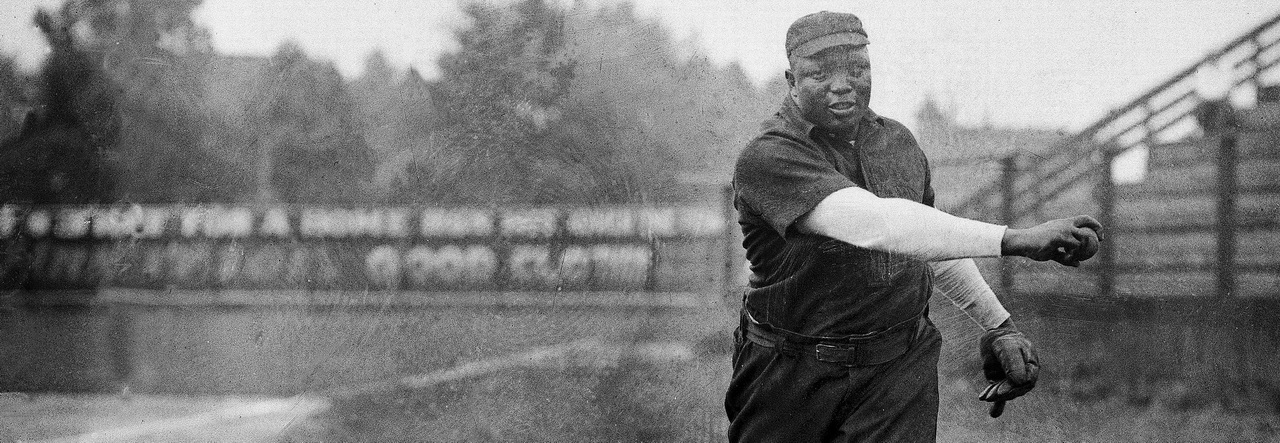
The pitching arrived all at once last season: A. Rube Foster opened the year in the bullpen, moved into the rotation, and threw 204 innings with a 3.30 ERA and a 1.02 WHIP, coming 2nd in the Rookie of the Year voting. Smokey Joe Wood, 22, went 15-12 behind him and hit well enough to DH on his own start days. Craig Kimbrel inherited the ninth inning and kept it. That, along with the deepest bullpen in the league, makes the staff feel pretty settled.
In front of them sit Albert Pujols and Stan Musial, both 23, both already among the best bats in the league. And then … well … then there wasn’t a lot else. 37% of the Monarchs’ plate appearances went to hitters with a sub-.700 OPS, which is how a team leads the Marvin Miller Division into July and finishes 79-84 and 3rd. The response has been blunt: Robinson Canó, Willie McGee, Lou Brock and Steve Evans all open this season at Triple-A St. Louis, and the org went out and bought 2 bats.
The park is rated the most extreme pitcher’s yard in the league, and the club builds as though that’s true — chase doubles into the gaps, not homers, and let good arms play up.
This is a connoisseurs’ franchise. Its fans will take a 2-1 win and the bases-loaded walk, and they’ll tell you Foster is an ace no matter what his stuff grades say.
▌ 2001 Revisited
A year ago we wanted a .500 finish, and the worst case we could imagine was the worst pitching staff in the league with an offense that couldn’t compensate. Kansas City went 79-84 — genuine progress from 66-88 — and got the exact inverse of the nightmare.
The staff turned into a strength. Last year, we thought that might come from Bob Gibson. Not so much: the lightning-armed Gibson put up a 6.82 ERA across 11 starts. Instead, it came from Foster and Wood, and from Lee Smith‘s 0.75 WHIP across 50 appearances, from Eddie Guardado, from Mike Kume‘s 1.95 in 22 games, and from Kimbrel taking the closer’s job after Jeff Pfeffer collected 16 saves with an ERA above 6.
Pujols took the step the preview asked for and then some: 316/375/645 with 44 homers and 96 extra-base hits, and the organizational MVP. Musial had the odd year — 300/371/519 is not a bad line, and 59 doubles is a marvelous one, but 13 homers from a bat like that is a bit of a concern? Maybe?
And it collapsed anyway, because underneath the top the lineup could not hit. Ozzie Smith won a Gold Glove, stole 64 bases and posted a .660 OPS in 525 plate appearances. Canó was among the worst bats in the league. McGee, Frankie Frisch and Brock were not much better.
The pitching arrived in force. The hitting never did, but the signal for change was clear, and acted on — gone are the days of Lou Brock and Willie McGee in the OF, with the Monarchs settling on Cool Papa Bell for speed and defense. Gone as well is the experiment of Pujols at 3B, with Doug Rader being brought over from Los Angeles.
▌ Key Changes
In: Benny Kauff (NYG); Doug Rader (LAA)
Out: Dale Murphy (NYG); Jeff Pfeffer (LAA); José Rijo (LAA)
Opening Day Rookies: Cool Papa Bell; Eddie Guardado; Mike Kume; Jock Menefee; Merv Rettenmund; Joe Thatcher; Kolten Wong
▌ Best Case for 2002
The bottom of the order stops giving at-bats away. Benny Kauff — 38 homers and 39 doubles for the Gothams last year — and Doug Rader turn 2 of last season’s sinkholes into real at-bats, second base firms up into something merely ordinary, and the 23-year-olds take the step their age promises: Pujols again, Musial’s power back alongside the doubles, Ted Simmons building on 47 doubles and an .830 OPS from behind the plate.
Cool Papa Bell, the organizational Minor League Player of the Year, runs down everything hit into the biggest outfield in baseball. Foster repeats, Wood takes the next step, and the spring’s crowded rotation audition produces 3 arms that hold.
Do that, and the pen shortens every game to 7 innings, and a club that led the division in July just might lead it in September.
▌ Worst Case for 2002
The lineup stays bottom-heavy, only with new names attached. Rader drove in barrels of runs in 2000, but really hasn’t shown a lot since: the statheads are not thrilled with his arrival.
Second base never gets solved. The back of the rotation stays replacement-level and the innings behind Foster and Wood get expensive. And Lee Smith is 35 with no proven arm behind Kimbrel, so one injury turns the league’s deepest bullpen into an ordinary one.
▌ Key Questions
- Can the front office make the hard decisions to raise the standard? The first answer was demotion — Canó, McGee, Brock and Evans are all at Triple-A — and the second was Kauff and Rader, which is where it gets interesting: Rader is a power-and-defense third baseman with a .297 OBP. Kauff is the cleaner fit, a left-handed masher of right-handed pitching. Sure, they need to succeed, but perhaps the more important thing here is the front office finally addressing the offense.
- Who, exactly, plays second base? Demoting Canó was easy, given his 2001. But … replacing him with a Kolten Wong / Frisch timeshare seems hardly an improvement.
- Is the rotation more than 2 names? Foster and Wood are a real front pair. Behind them the org has quantity and no clarity — Adam Wainwright threw 187 innings of 4.05 ball at Triple-A, Gibson still has the best stuff on the staff, and Bob Shawkey was worth −2.2 wins in 101 innings. The measure of the crowd: Frank Castillo made the NL All-Star team last year, put up a 5.21 ERA in 193 innings, and opens this season at Triple-A.
▌ Roster Evaluation
Tier = the player’s 2001 positional grade (S best → F worst; color coded S A B C D F). Bold names carry a substantive WBL track; italic names are pure projection — a hope, not a grade — with no qualifying track to anchor them.
| Pos | Players |
|---|---|
| C | Simmons C · Pérez |
| 1B | Powell C |
| 2B | Frisch F · Wong |
| SS | O. Smith D |
| 3B | Rader F |
| LF | Pujols S · Bell |
| CF | Kauff B |
| RF | Musial C · Rettenmund |
| DH | Harris C |
| SP | Foster S · Wood A · Wainwright · Gibson · Menefee · Shawkey |
| RP | Kimbrel A (CL) · L. Smith S · Guardado S · DiPino C · Kume B · Thatcher |
Wood is a real bat — 287/343/504 in 140 plate appearances, taken mostly on his own start days — and the org has been open about wanting more of that. And Kume is the mirage: an amazing 2001, but nobody is quite sure how he gets anybody out, ever.
▌ Talent Ratings
| WBL | Minors | |
|---|---|---|
| Raw Power | 1B Boog Powell | 1B Lew Brown |
| Batting Eye | LF Cool Papa Bell | 1B Otto Schomberg |
| Contact | RF Stan Musial | LF Wade Johnston |
| Running Speed | 2B Kolten Wong | CF Jarrod Dyson; CF Alex Diaz |
| Base Stealing | LF Cool Papa Bell | CF Jarrod Dyson; 1B Joe Start |
| IF Defense | SS Ozzie Smith | SS Sam Mongin |
| OF Defense | LF Cool Papa Bell | RF Tommy McCarthy |
| Stuff | RP Craig Kimbrel | RP Matt Thornton |
| Control | SP Smokey Joe Wood | SP Luke Hamlin |
| Velocity | RP Craig Kimbrel | RP Vinnie Pestano |
▌ Best In The Minors
| Rank | Age | Pos | Name |
|---|---|---|---|
| 1 (4) | 21 | SP | Bill Singer |
| 2 (9) | 23 | SS | Sam Mongin |
| 3 (45) | 22 | LF | Wade Johnston |
| 4 (50) | 23 | 3B | Bill Bradley |
| 5 (57) | 25 | RP | Vinnie Pestano |
| 6 (86) | 21 | 1B | Otto Schomberg |
| 7 (88) | 22 | 2B | Keston Hiura |
Others: C Johnny Bassler, P Larry French, P Matt Morris, P Hilton Smith.
The 5th-best system in the league, even with Foster (#2) and Bell (#3) now with the big league club. Wade Johnston has plummeted from being ordained the top overall prospect in the league to where he is now, but he was good enough in the Spring to keep the argument alive. Other names from last year: Heliodoro Hidalgo went to the House of David in the deal that brought Lee Smith, Earl Averill to Baltimore, and Carlos Baerga to the Gothams in the Kauff trade.
But the Monarchs just reloaded. Bill Singer is the 4th-ranked prospect in baseball, Sam Mongin has climbed to 9th, and the layer under them is more arms — French the lone left-hander with real upside, Morris and Hilton Smith behind him — plus 19-year-old catcher Johnny Bassler. And note the name at the bottom of the ranked list: Keston Hiura plays second base. So that could be useful.
▌ Superlatives
| Most | Least | |
|---|---|---|
| Age | Joe Start, 38 | Johnny Bassler, 19 |
| Height | Adam Wainwright, 6’7″ | Otto Briggs, 5’7″ |
| OPS | Albert Pujols, 1.020 | Otto Briggs, .585 (A) |
| HR | Albert Pujols, 44 | Otto Briggs, 2 (A) |
| SB | Ozzie Smith, 64 | – |
| WAR (bat) | Albert Pujols, 6.2 | Otto Briggs, −0.4 (A) |
| W | Smokey Joe Wood, 15 | – |
| SV | Stan Yerkes, 23 (AA) | – |
| ERA | A. Rube Foster, 3.30 | Hilton Smith, 7.29 (A) |
| WAR (pit) | A. Rube Foster, 3.8 | Bob Shawkey, −2.2 |
Stats across all levels, 2001 season. 200 PA / 75 IP minimum. Non-WBL levels tagged in parentheses.